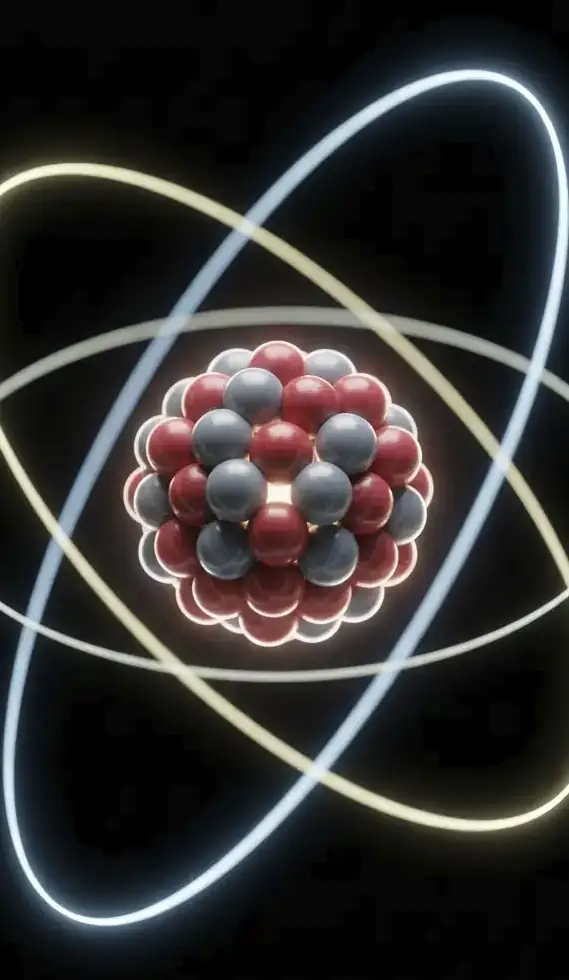
Nothing is created, destroyed, or lost — just geometrically rearranged.
Learn Chemistry out of curiosity — not just to crack entrance exams. Explore 45 foundational topics across Physical, Inorganic, and Organic Chemistry, from the Mole concept to Carbohydrates — begin with a single atom, and follow it all the way to the reactions that built every material in the world around you, including you.
Physical Chemistry · Inorganic Chemistry · Organic Chemistry
Dr. Samudra Dasgupta
- PhD in Data Science — University of Tennessee (Specialization: Quantum Computing)
- Master of Science in Engineering Sciences — Harvard University (Graduate Student Fellowship)
- B.Tech (Hons.) in Electronics & Electrical Communication Engineering — IIT Kharagpur (Best Thesis Award)
- MBA — Indian School of Business (Young Leader Award)
Physical Chemistry
Mole Concept
Friends - lets start our chemistry journey. First up is the mole concept.
The question I am asking is super simple - What is a Mole?
It's fashionable to say these days that: hey, it's just a number! Like a dozen is 12 things. Similarly, a mole is 6.022 × 10²³ things.
But why this number? Why not 7.022 × 10²³? Why do we even need a name for "just a number" at all?
Not only that - in textbooks you see mysterious sentences like: "N grams of an element with atomic weight N always contains a mole of atoms." It almost sounds like a deep, mysterious law of nature.
Let's unpack this.
The main thing to understand is this: if you compute the mass of 6.022 × 10²³ protons, you get roughly 1 gram. Simple right?
This simple fact though generalizes powerfully. In a way that gives an illusion that the mole is something very deep and fundamental. Trust me, nothing deep is going on.
You see, 6.022 × 10²³ protons is roughly the same as 6.022 × 10²³ hydrogen atoms (hydrogen has only one nucleon, and electron mass and nuclear binding energy are both negligible). So a mole of hydrogen atoms weighs about 1 gram.
Similarly, 12 × 6.022 × 1023 protons will weigh roughly 12 grams. Protons and neutrons weigh about the same, so that's also 12 × 6.022 × 1023 nucleons. And Carbon has exactly 12 nucleons. So a mole of carbon atoms also weighs about 12 grams.
So you see, a mole has nothing to do with a specific element. It is simply asking how many protons makes 1 gram. That's why it appears like some deep mystery when we say: "N grams of an element with atomic weight N always contains a mole of atoms." But it's really just an invitation to "memorize" without understanding, which always ends in disaster. A mole is neither "just a random number" nor anything deeply mysterious - it's just a number.
But why all this confusion in the textbook? You see I cannot define the mole as: "A mole denotes how many nucleons sum up to 1 gram". Why? Because there is no concept of a "representative nucleon" unless we refer to a specific element. And nobody likes defining things using specific arbitrary elements. And that is where all the confusion stems from.
In 2019, Physicists said: "Enough! A mole is just a number. We will "fix" its value forever (using our knowledge of protons)."
Everything else that textbooks teach is good story-telling which is true but not helpful for conceptual clarity.
2-Day Crash Course.Master this Chapter.
Click here.
Stoichiometry
Stoichiometry is the math of chemical reactions — using a balanced equation to calculate exactly how much of each reactant and product is involved.
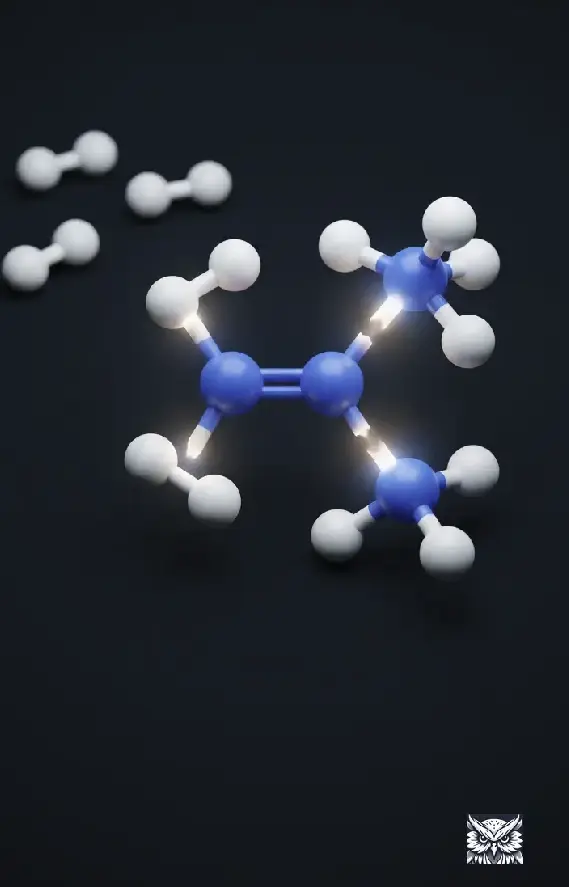
Nitrogen and hydrogen balance into ammonia in one clean line. Every reaction keeping you alive right now is stoichiometry too — just thousands of coupled equations deep.
Nitrogen and hydrogen combine into ammonia in one exact, fixed ratio. Whichever one runs out first — the limiting reagent — decides exactly how much ammonia you get; the rest is the excess reagent, sitting there unreacted.
That's stoichiometry with two ingredients and one product — simple enough to balance by hand. But every reaction inside your own cells runs on the same underlying logic, just with dozens of reactants, enzymes, and cofactors feeding into a single step, and that step feeding straight into the next.
Some of those "ingredients" aren't small, tidy molecules like ammonia at all — they're proteins, assembled atom by atom across a chain of separate reactions, each one needing its own exact inputs in its own exact ratio, all running simultaneously, thousands of times a second, in every one of your trillions of cells.
If balancing one equation with two ingredients takes real work, what does it even mean to "Stoichiometrically balance" a network of thousands of coupled reactions running at once, inside every living cell, all the time?
2-Day Crash Course.Master this Chapter.
Click here.
Eudiometry
Eudiometry is the technique of measuring the volume change of gases during a reaction to work out their composition.
A shrinking column of gas led an 18th-century chemist to accidentally discover what water actually is.
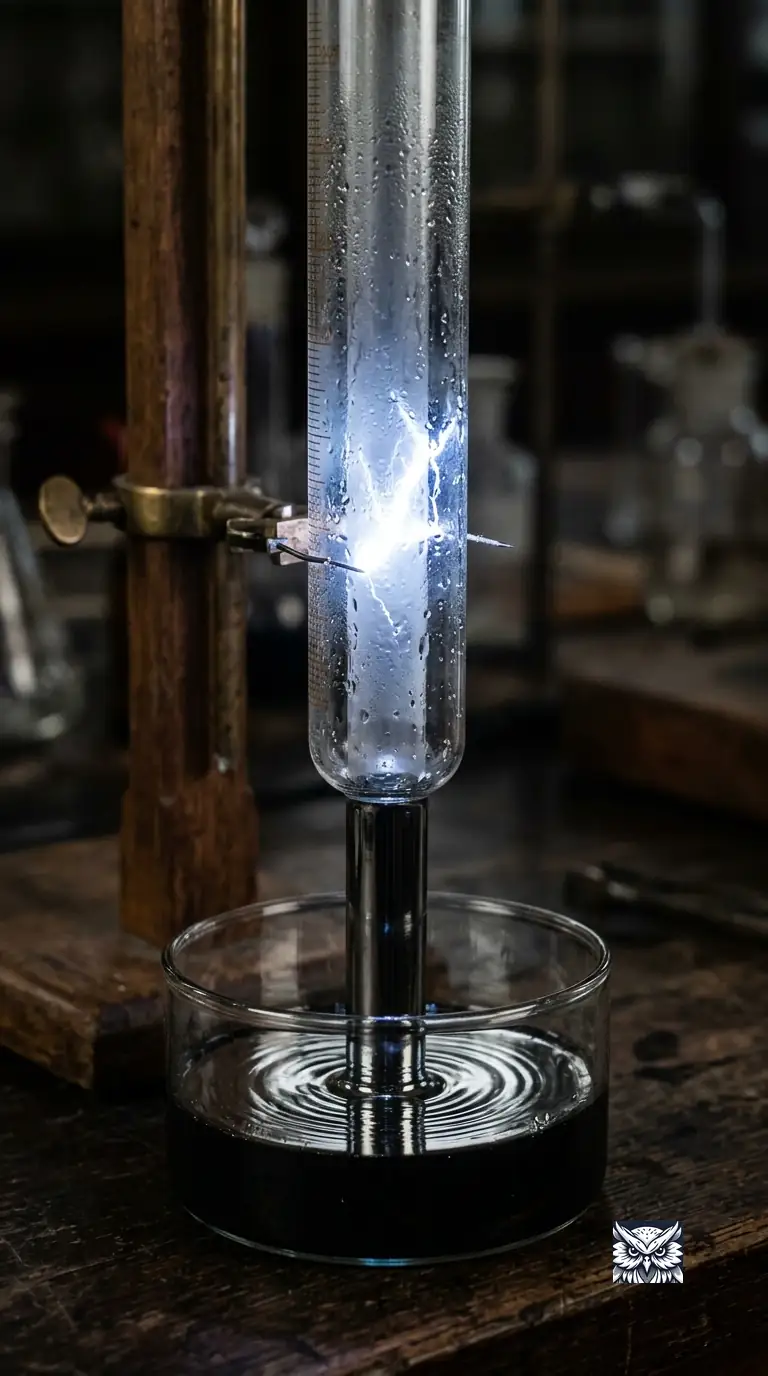
Look at that spark. It's about to explode a gas mixture trapped inside a tube. The "shrinking" gas column is how chemists "weigh" gases (which they can't put on a scale obviously).
The trick works because of one simple rule: equal volumes of any gas, at the same temperature and pressure, always hold the same number of molecules. So instead of counting invisible molecules directly, chemists just measure how much the gas shrinks after the spark.
This exact setup is how one 18th-century chemist proved something nobody believed: water is not a basic element. He sparked hydrogen and oxygen together, and what condensed afterward was pure water — made from nothing but two gases.
If water — the most familiar substance on Earth — turns out to be two invisible gases in disguise, what else around you might secretly be something else entirely?
2-Day Crash Course.Master this Chapter.
Click here.
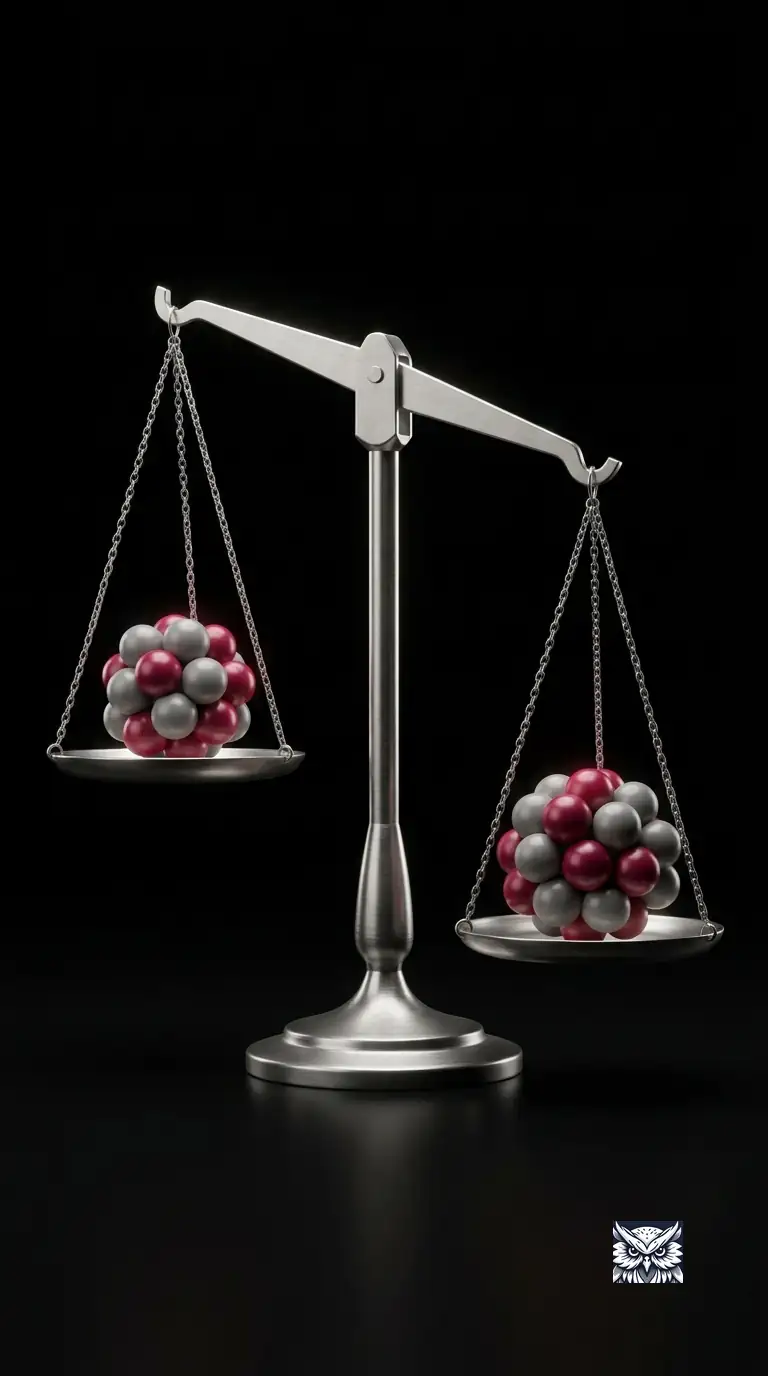
Atomic Weight
Atomic weight is the weighted average mass of an element's naturally occurring isotopes, relative to a fixed standard.
Same element, same protons — yet one side of the balance still tips lower. Meet the isotope.
Look at this balance. Same element, same number of protons on both sides — yet one pan tips lower. That's an isotope: identical chemistry, different weight.
The atomic weight you memorise isn't any single atom's real weight. It's an average across all of an element's isotopes, weighted by how common each one actually is.
For decades in the 1800s, chemists couldn't even agree on atomic weights. Different labs used different scales, and the chaos made simple formulas look wrong. One chemist fixed the numbers for good at a famous 1860 conference — and a young scientist in the audience, Dmitri Mendeleev, used those corrected weights to build the periodic table nine years later.
If the periodic table came together after a long-running disagreement got settled, what might "today's unresolved disagreements" be waiting to reveal?
2-Day Crash Course.Master this Chapter.
Click here.
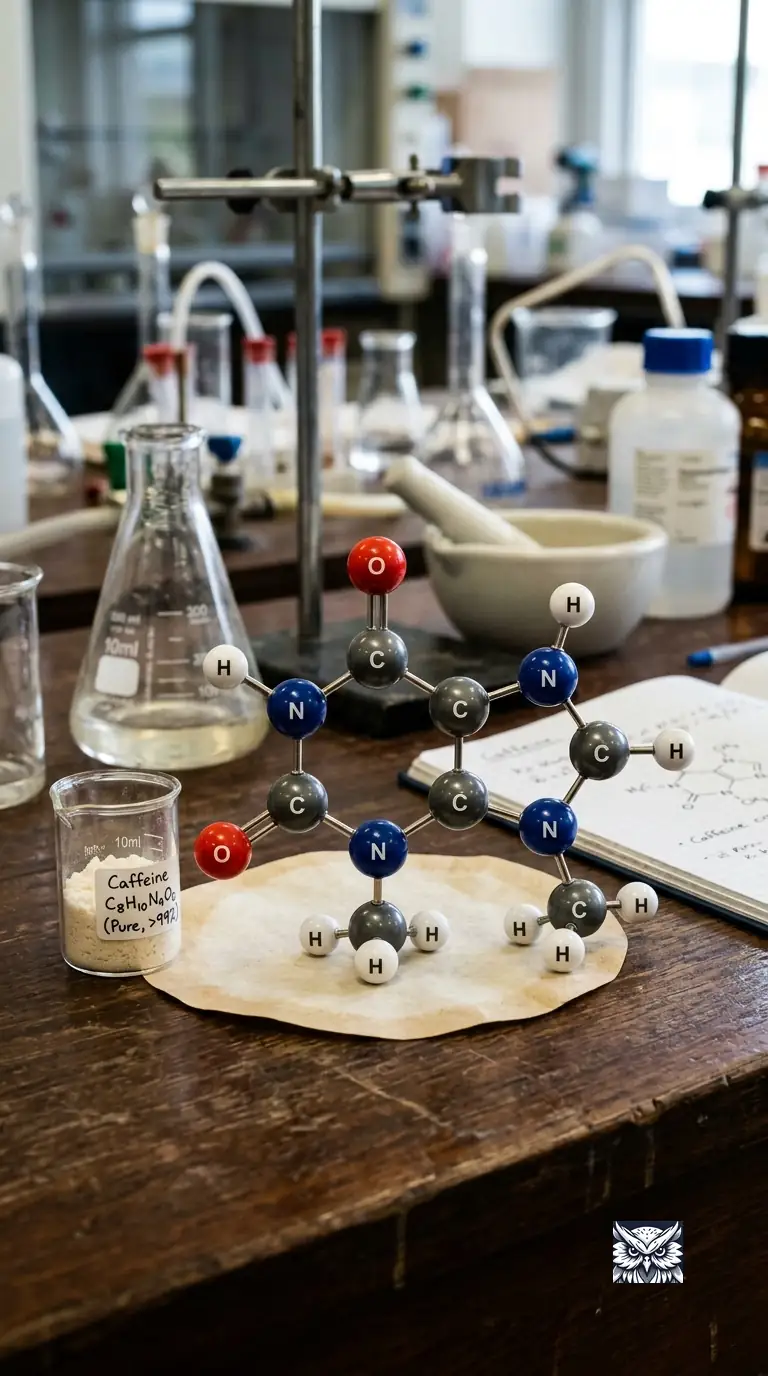
Molecular Weight
Molecular weight is the mass of one mole of a compound's molecules.
It is obtained by summing the atomic weights of every atom in its formula.
Look at this molecule. It's coffee (or caffeine). Its molecular weight is the weight of one mole of these molecules — that is 6.022 × 10²³ caffeine molecules.
Caffeine works because its shape looks like adenosine, a molecule the brain makes to signal tiredness. Your neurons get blocked from the real signal, and you feel awake — even though nothing about your actual fatigue has changed.
If caffeine works by tricking your brain into ignoring how tired you really are, is that fake alertness good for your health?
2-Day Crash Course.Master this Chapter.
Click here.
Chemical Equivalence
Why does our annual blood test report sodium, potassium, and calcium in "milliequivalents" per litre?
Is there a link to Chemical Equivalence? What is Chemical Equivalence?
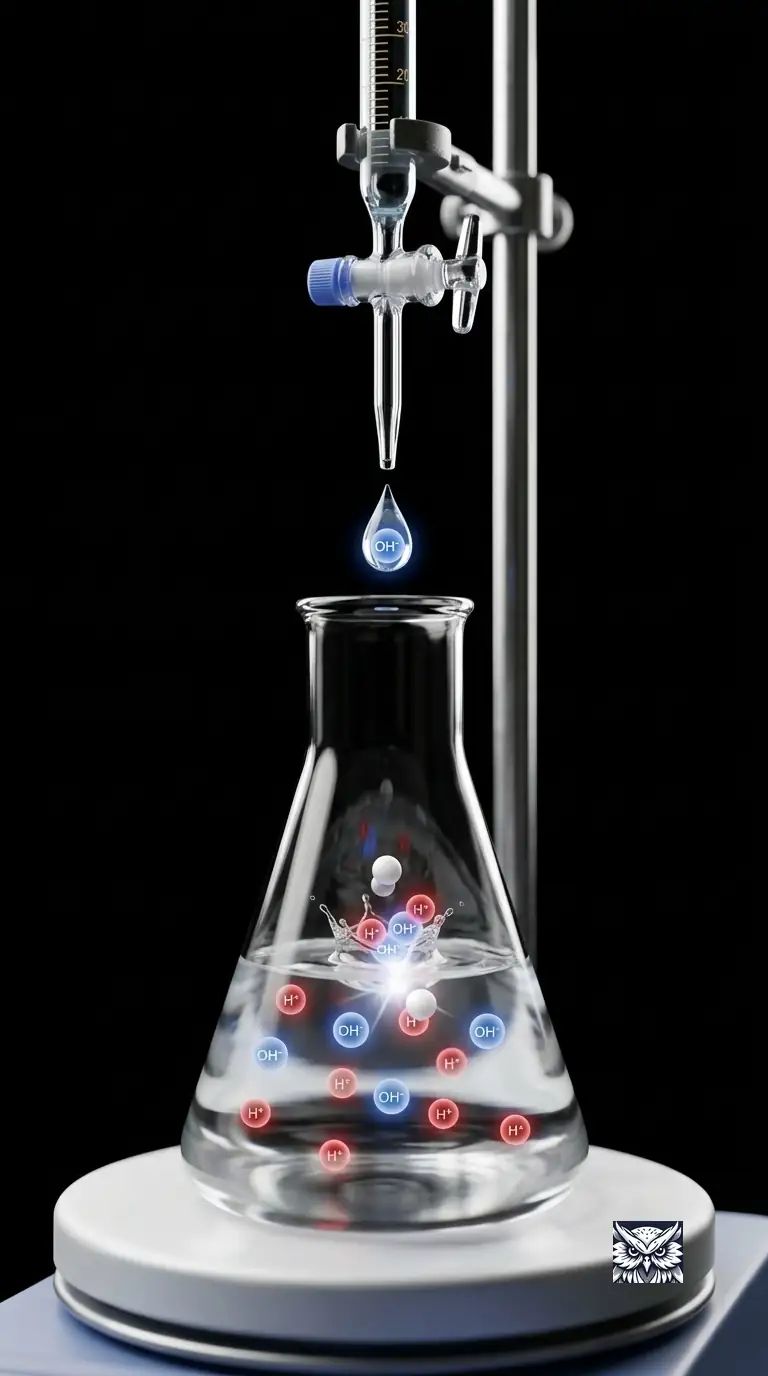
A chemical equivalent is the amount that supplies one mole of charge (H⁺, OH⁻, or one electron). It measures reacting power. For example, one mole of aluminium carries three times the reacting power of one mole of sodium.
This is why your blood test results for sodium, potassium, and calcium come back in milliequivalents per litre, not just milligrams. Your cells don't care how much a particle weighs. They care about how much charge a particle is carrying. Charge has to stay balanced in right proportion in the blood.
Can the same element have different equivalent weights in different reactions?
2-Day Crash Course.Master this Chapter.
Click here.
Volumetric Calculations
How can you tell how much stomach acid a given antacid tablet can neutralize?
Is there a technical name for working out backwards the chemical concentration by measuring how much of a known solution it takes to complete a reaction?
Yes. Volumetric analysis.
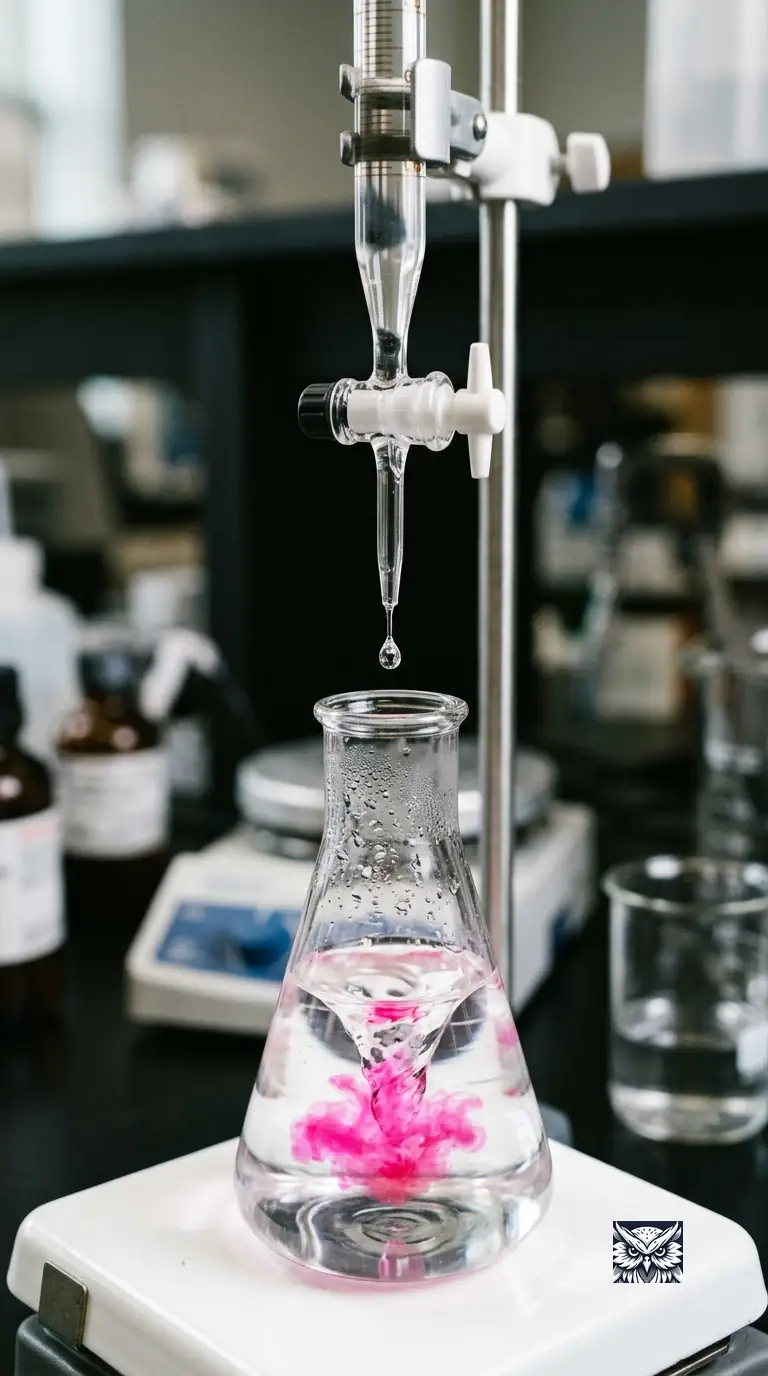
Look at that flash of pink in the diagram. One single drop just tipped a colourless solution over the edge. That exact instant — that flash of pink — is when the end of a reaction is made visible. So, not surprisingly, that incoming single drop has been called the "endpoint". Endpoint denotes the end of the reaction.
The endpoint lets chemists work backward. If they know how much of one solution it took to react completely, they can calculate how much of the unknown was there in the first place.
This is how antacid tablets get tested before they reach a pharmacy shelf. Dissolve one in acid, titrate until the colour flips, and you know exactly how much stomach acid that tablet can neutralise.
Could one single drop precisely reveal multiple unknowns in a chemical reaction?
2-Day Crash Course.Master this Chapter.
Click here.
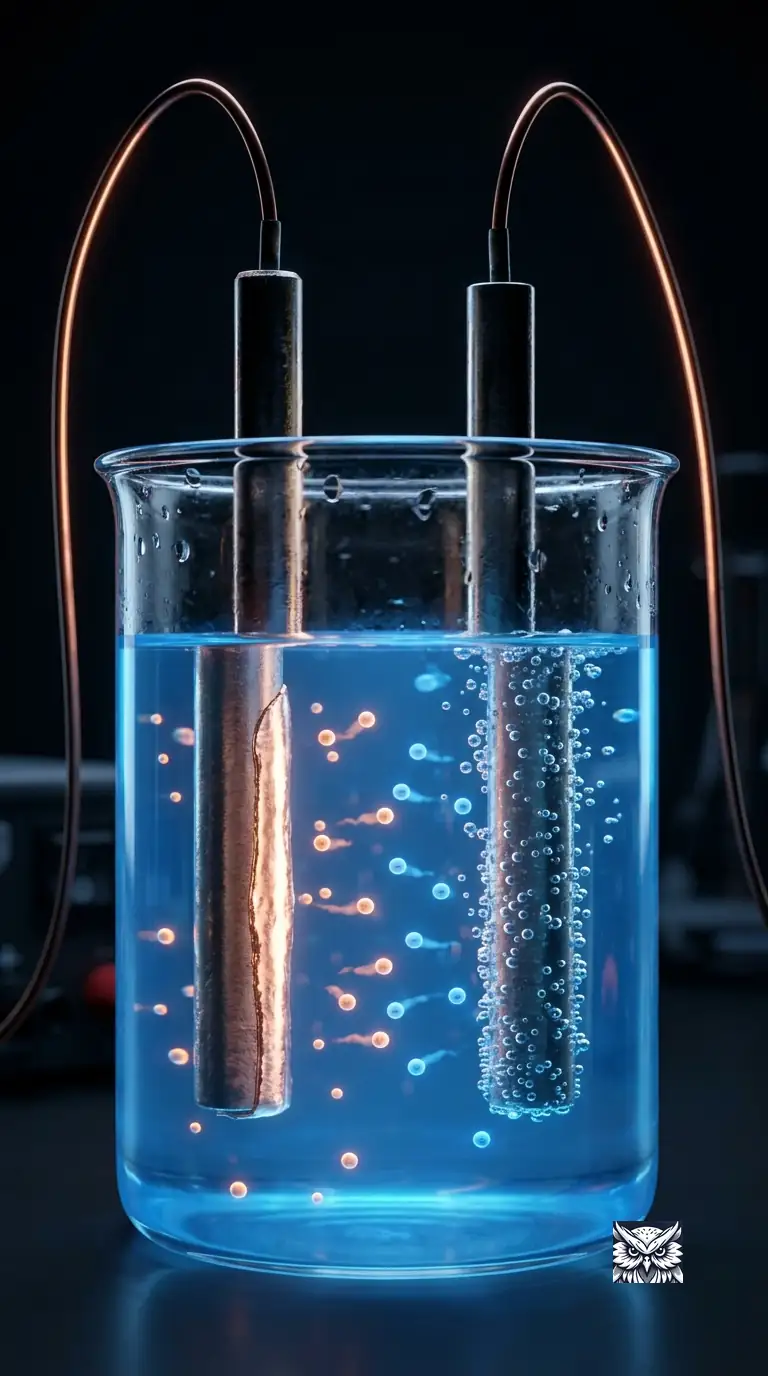
Electrolysis
The guy who invented Electrolysis never attended high school. Yet what he discovered is absolutely crucial to all textbooks all over the world.
One of the many things this guy discovered (without schooling) was Electrolysis — the process of using current to force a reaction.
Look at this diagram. Charged ions are drifting toward two electrodes. A shiny layer of metal is quietly building up on one of those electrodes. The metal is being pulled out of solution, atom by atom, by electric current.
Michael Faraday, a bookbinder's apprentice with no formal schooling, worked out exactly how much metal a given amount of electricity deposits. Push through 96,500 coulombs of charge — what chemists now call one faraday — and you'll always deposit exactly one equivalent of any metal.
Before Faraday, aluminium used to be worth more than gold. Why? Because pure aluminium was very rare. Nobody could extract pure aluminium from its ore. But electrolysis not only made it possible, it made it super easy to extract pure aluminium.
And once it did, the price of "precious" aluminium collapsed — from royal tableware to kitchen foil.
If a metal's value can collapse the moment chemistry finds a way to unlock it, is there any "fundamental truth" in calling "gold" precious?
2-Day Crash Course.Master this Chapter.
Click here.
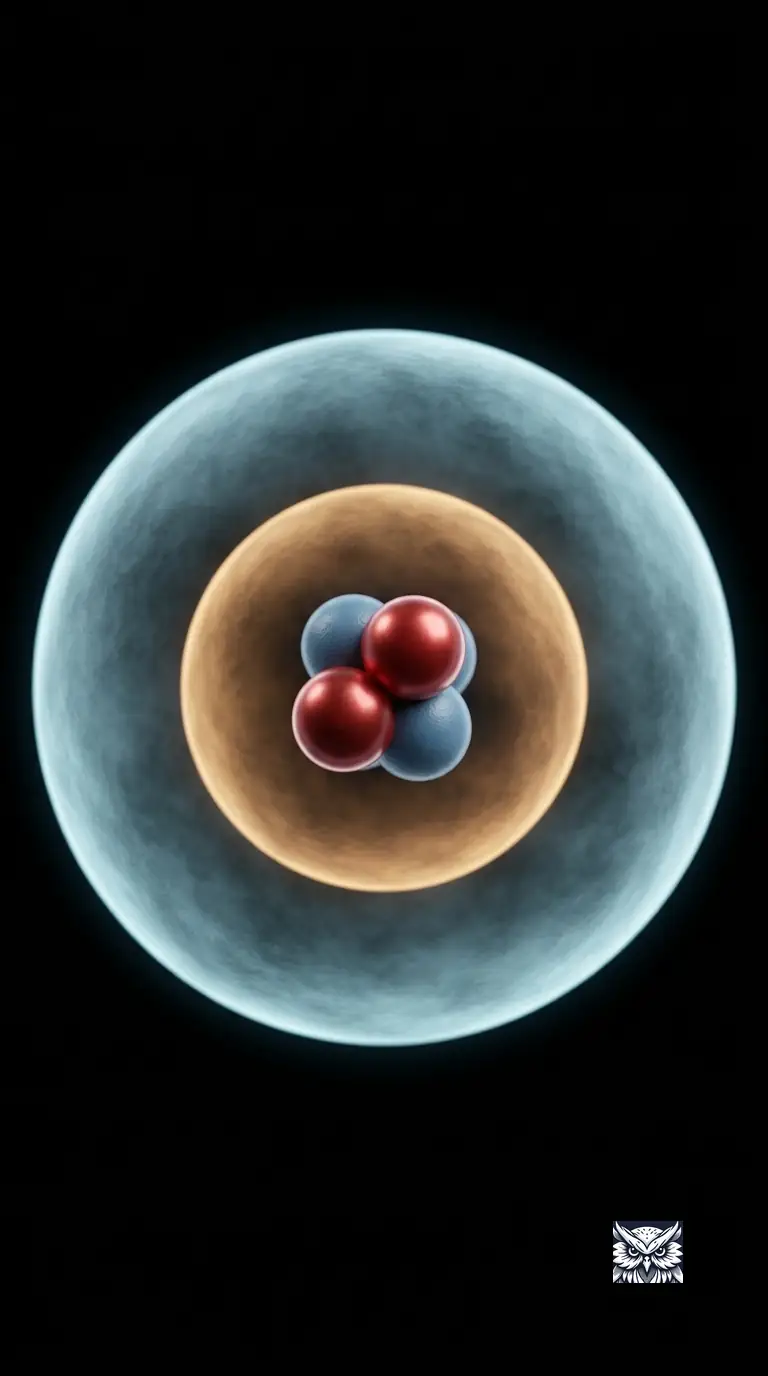
Atomic Structure
Have you seen the picture of electrons orbiting the nucleus? Did it remind you of the Solar System? That picture is completely wrong and an utter lie.
Atomic structure is the study of how protons, neutrons, and electrons are arranged inside an atom.
Look at this atom. Two electrons circling a nucleus. Even this "spherical orbital" picture is a simplification.
Werner Heisenberg proved something strange: in any given moment, you cannot know both where an electron is and how fast it is moving. Not because our instruments aren't good enough. No — it is not our fault. You see, Mother Nature does not allow us to have that knowledge — the simultaneous knowledge of where an electron is and how fast it is moving, at the same time. In fact, that "knowledge" does not exist. It's a hard limit built into reality itself.
So instead of a neat orbit, an electron is really a cloud of probability: more likely here, less likely there. It can be found anywhere and everywhere — with some probability.
This isn't philosophy. Every modern computer chip is designed around this.
That makes me wonder: Are we sure the electron really "exists" (as a particle) before it is observed? Or does it "manifest" as a "particle" only post observation?
2-Day Crash Course.Master this Chapter.
Click here.
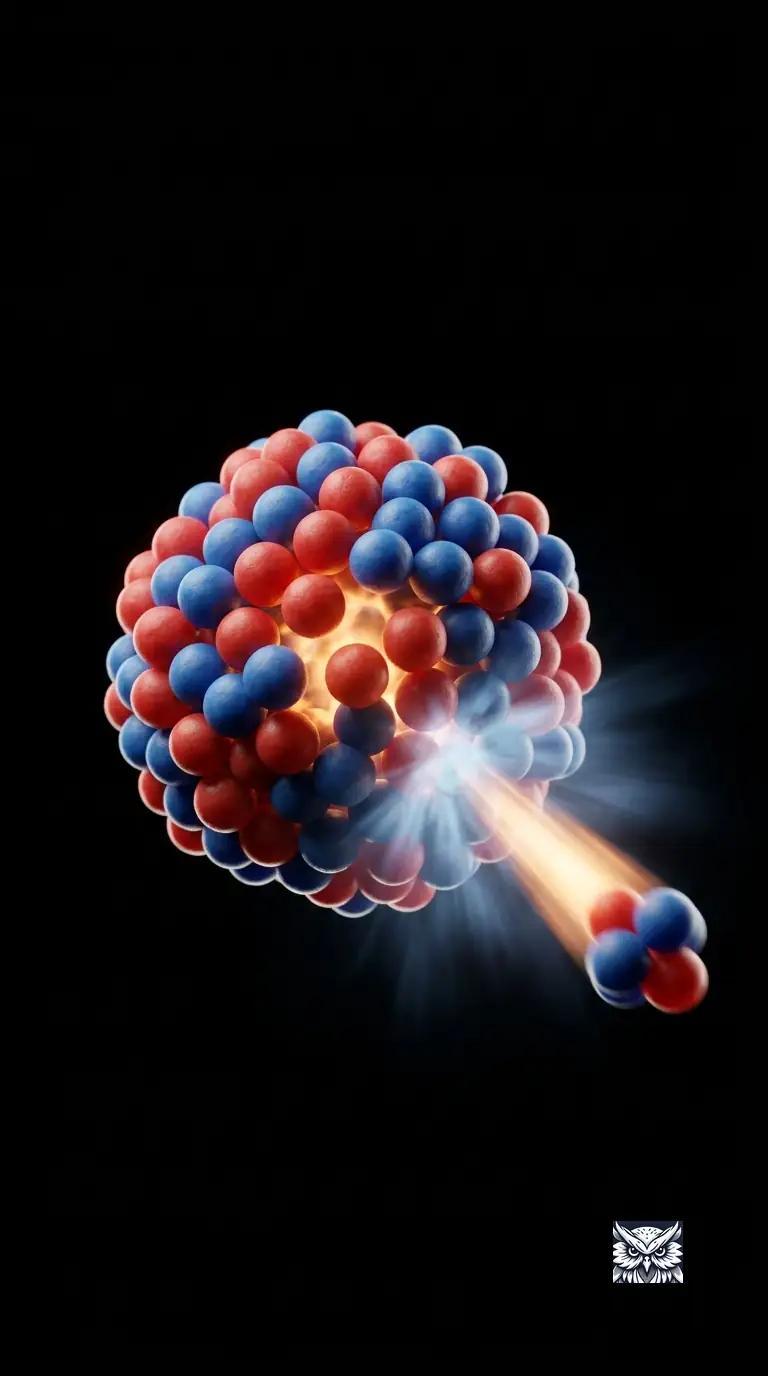
Radioactivity
There is a reason dating is radioactive.
Carbon Dating uses the principles of Radioactivity — the spontaneous breakdown of an unstable nucleus. One element morphs into a completely different element — like instant magic.
Look at this flickering, unstable nucleus. Nobody can predict exactly when any single unstable atom will decay — not because we lack the right instruments, but because the moment is genuinely random. Given a billion identical atoms, though, chemists can predict almost exactly how many will have decayed after a fixed stretch of time, called the half-life.
That strange mix — individually unpredictable, collectively exact — is what makes carbon dating work. Living things constantly replace their carbon, keeping a steady ratio of radioactive carbon-14 mixed in. The moment something dies, that carbon-14 starts silently decaying on its own fixed schedule, letting scientists read off its age thousands of years later.
Nobody can ever predict when a single atom will decay. Is that randomness just something waiting to be fixed in a future PhD dissertation? Or do Laws of Nature not allow us to probe any further?
2-Day Crash Course.Master this Chapter.
Click here.
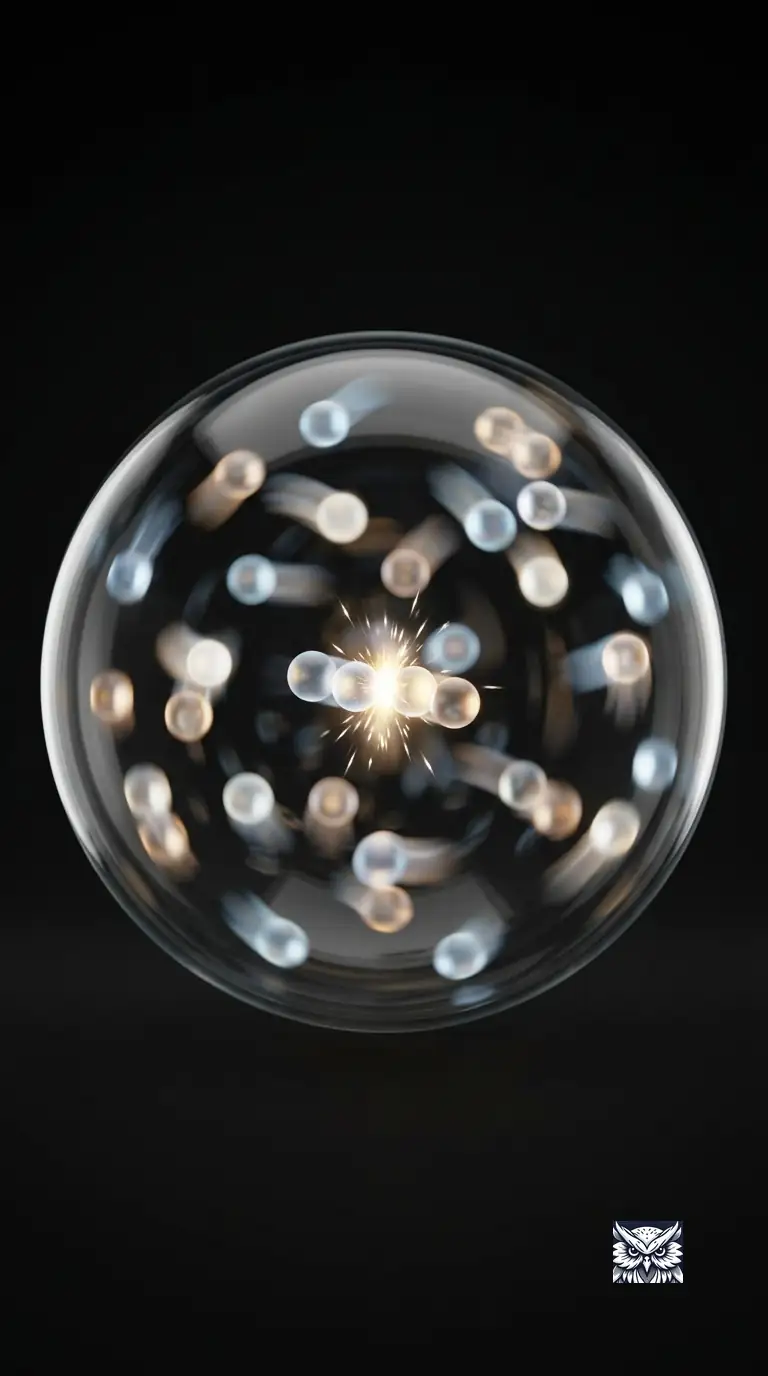
Properties of Gases
We know that pressure in gases arise from molecules colliding chaotically. But why isn't that pressure chaotic and uneven?
If the container had just one molecule, will that one molecule still apply "pressure"?
Look inside this glass vessel. The molecules are slamming into the walls and into each other, constantly and chaotically. That endless hail of collisions is the only reason gas pressure exists at all.
But why is this chaos absent when we measure pressure? Because it averages out. The "steady" push of gas pressure is really billions of chaotic collisions per second, averaging into something that looks calm.
Squeeze the same gas into a smaller space, and those collisions happen more often — which is why pressure rises. Cool the gas down instead, and its molecules move slower, hitting the walls with less force.
Chemists chased that slowing-down all the way to its logical end, and predicted a temperature where molecular motion would stop completely: absolute zero (-273°C). Real labs have gotten within a billionth of a degree of it — but never actually reached it.
Why can't we reach absolute zero?
2-Day Crash Course.Master this Chapter.
Click here.
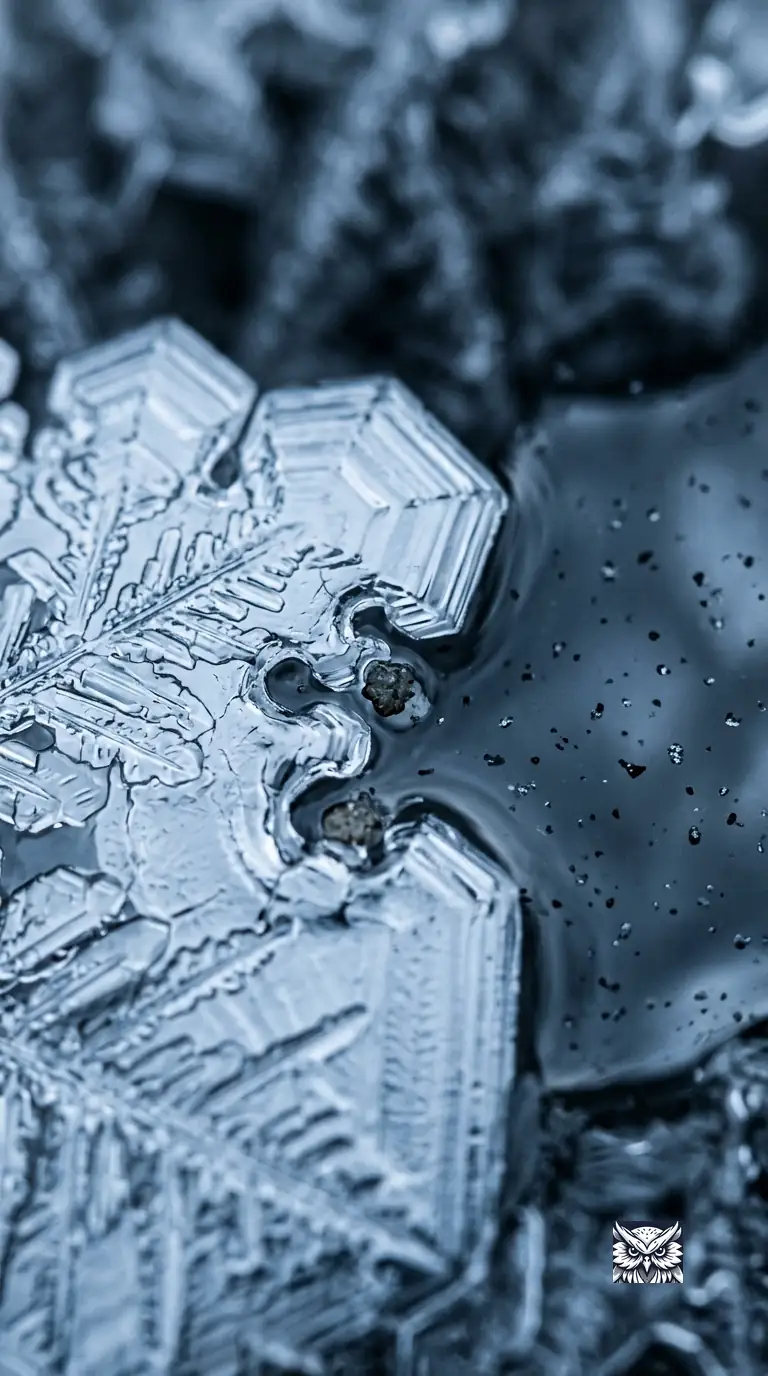
Dilute Solutions & Colligative Properties
"Colligative" is a strange word. What does it mean?
"Colligative" literally means "bound together by number" — this chapter is about properties of solutions that depend only on how many particles are dissolved, and not on what they are.
Have you ever wondered why tossing salt onto a frozen sidewalk can clear away the ice, even on a freezing winter day? You see, at 0°C, pure ice and liquid water are locked in a balanced tug-of-war, freezing and melting at the exact same speed.
But when salt dissolves into the surface liquid, its particles crowd the water molecules and get in their way. These extra particles block water molecules from re-attaching to the ice lattice, drastically slowing down the freezing process. Because melting continues at its normal pace, the ice is forced to turn into liquid water — even well below 0°C. Chemists call this phenomenon freezing point depression.
But this effect isn't unique to salt. Whether you dissolve salt, sugar, or antifreeze, the change in temperature depends on the number of dissolved particles, not on what those particles actually are. Behavior shifts driven purely by particle count rather than chemical identity are known as colligative properties.
Why do some properties depend only on how many impurities you dissolve — not on what you dissolve?
2-Day Crash Course.Master this Chapter.
Click here.
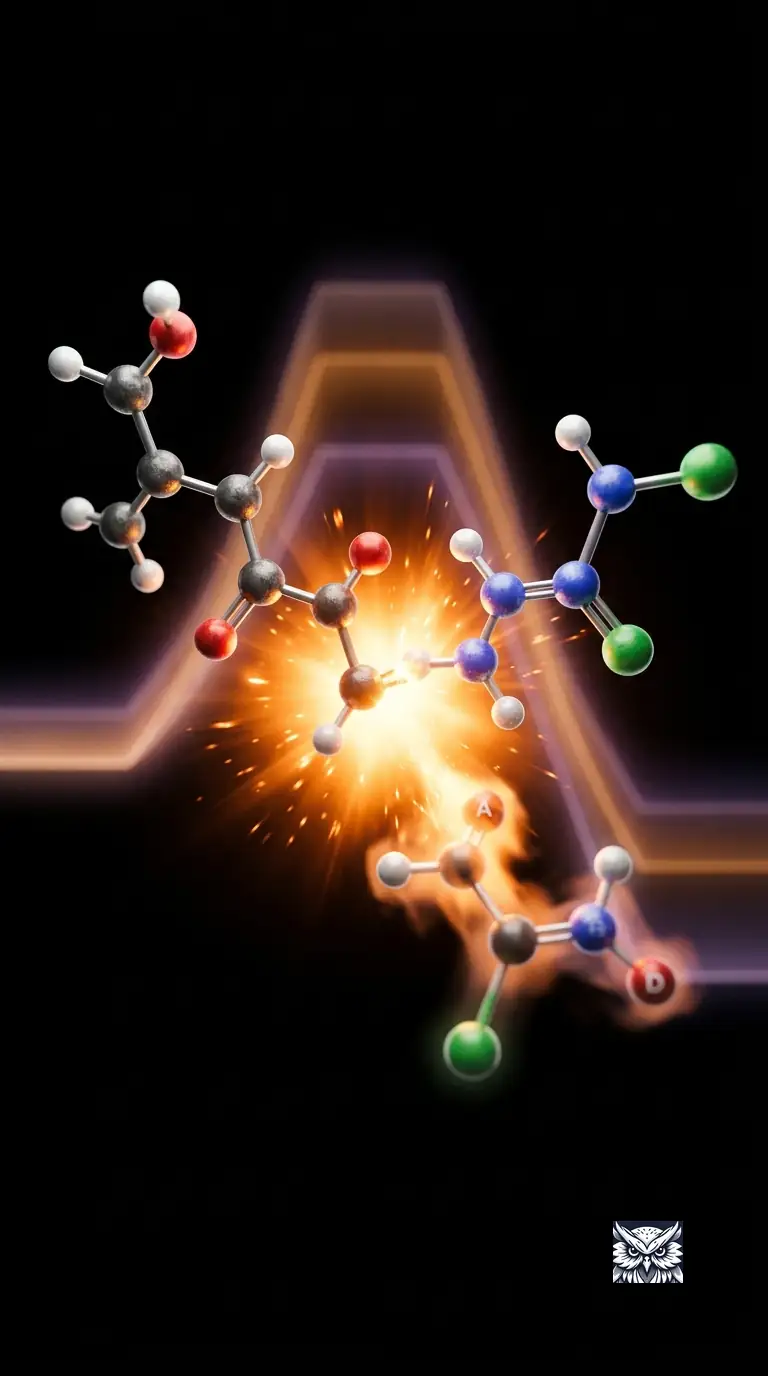
Chemical Thermodynamics
Why does a burning match release a burst of heat and light — but never absorb it back?
Thermodynamics is the study of energy. Chemical Thermodynamics studies why most reactions flow in one direction.
Strike a match, and its tip flares into a burst of heat and light. That energy wasn't created from nothing — it was stored inside the chemical bonds of the match-head, waiting to be released. When those bonds break, the energy escapes as heat.
But energy release alone doesn't guarantee a reaction will happen. It also depends on entropy (how spread out and disordered the products become compared to the reactants).
Entropy has a far bigger reputation outside chemistry. Physicists consider its constant increase one of the only truly unbreakable laws in the universe. It may be the reason why time seems to flow in only one direction.
Is "time" what watching entropy increase feels like from the inside? We don't know. We still don't understand time.
2-Day Crash Course.Master this Chapter.
Click here.
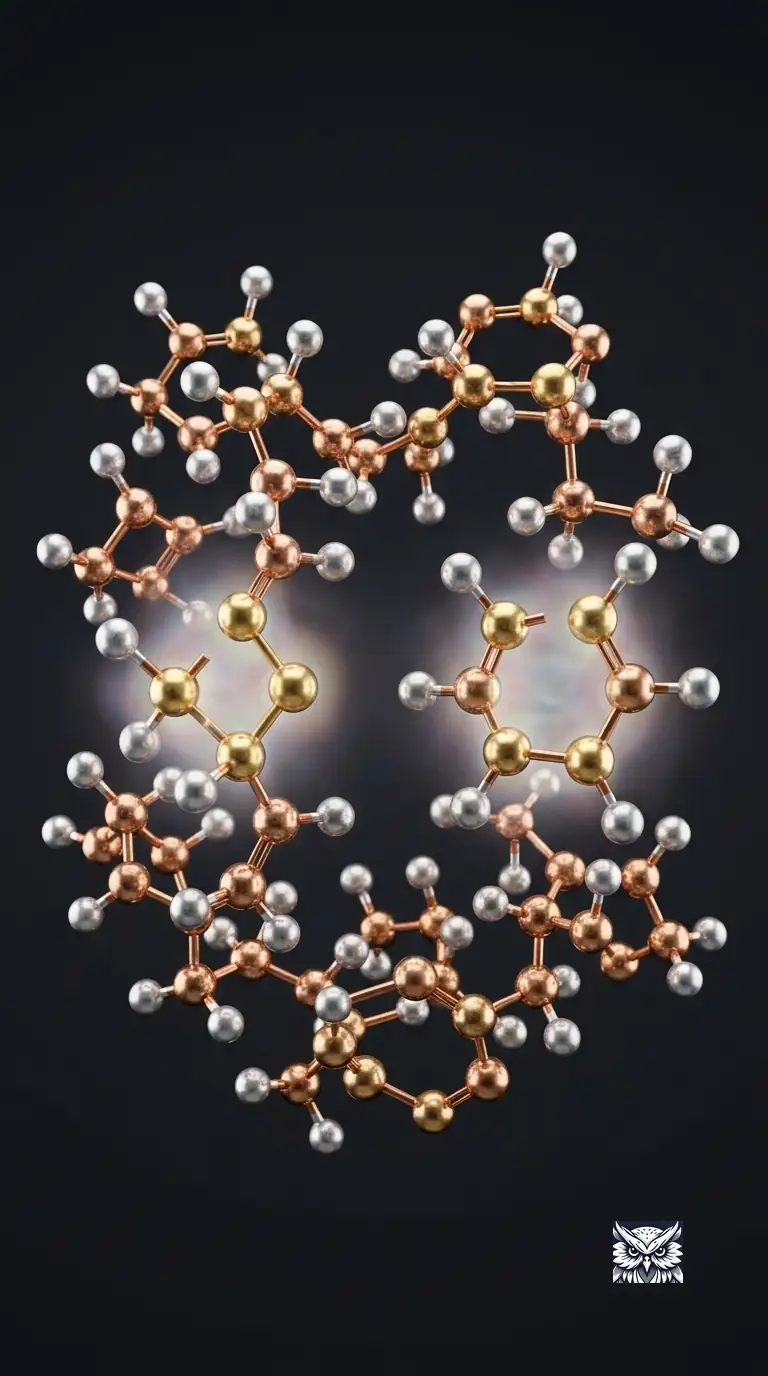
Chemical Equilibrium
Most chemical reactions never truly end. Instead, they reach a state of dynamic balance called "chemical equilibrium".
What looks like a finished reaction on the outside is actually a frenzy of perfectly matched movement on the inside.
To the naked eye, an equilibrium mixture appears completely frozen in time. Behind the scenes, however, reactants transform into products at the exact same speed products convert back into reactants. Because these opposing reactions occur at identical rates, overall concentrations never shift, creating a clever illusion of stillness. But this balance is far from rigid. Tweak the temperature, shift the pressure, or add more chemicals, and the reaction actively alters its position to counteract your push and restore balance.
In fact, this adaptive flexibility is what keeps you alive right now. For example, in your lungs, hemoglobin grabs oxygen where it is abundant, then releases it the moment it reaches oxygen-scarce tissues.
Chemical equilibrium is a lesson that true stability isn't about standing still — it's about maintaining harmony amidst constant change.
2-Day Crash Course.Master this Chapter.
Click here.
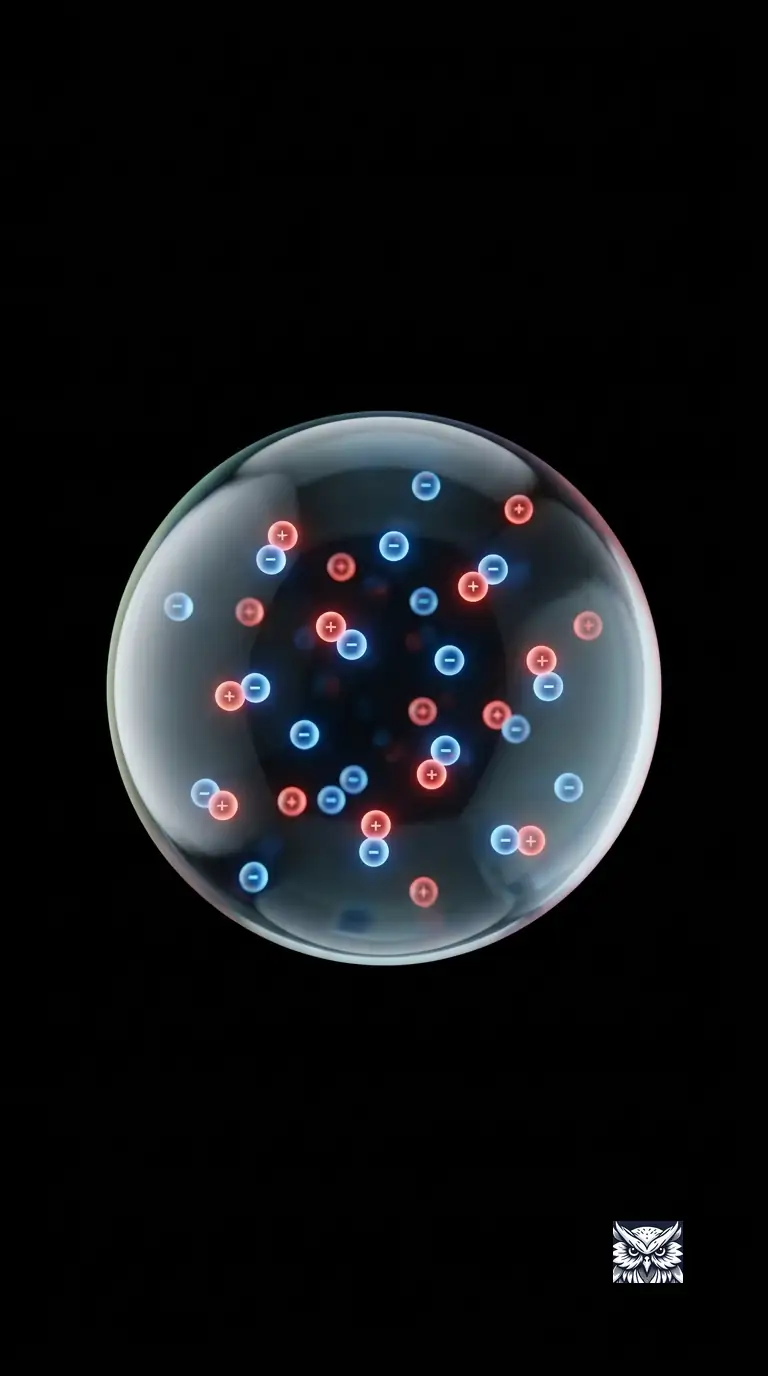
Ionic Equilibrium
Even "pure" water is not inert — it's constantly splitting itself into ions and reassembling.
Ionic equilibrium governs the tightrope walked by acids, bases, and salts in solution.
Left entirely to itself, water auto-ionizes into equal parts hydrogen (H⁺) and hydroxide (OH⁻) ions, maintaining a perfect, dynamic neutrality. The moment you introduce an acid or a base, you disrupt this baseline by dumping in extra H⁺ ions or sweeping them away. The famous pH scale is simply a scoreboard for tracking the mismatch.
For example, human blood locks its pH strictly between 7.35 and 7.45. This locking is what keeps your body's vital chemistry from collapsing. Drift outside this threshold by even half a unit, and essential proteins cease to function.
Since your entire body depends on holding a narrow ionic balance, what does it really mean at molecular level when we say "I am feeling great today"?
2-Day Crash Course.Master this Chapter.
Click here.
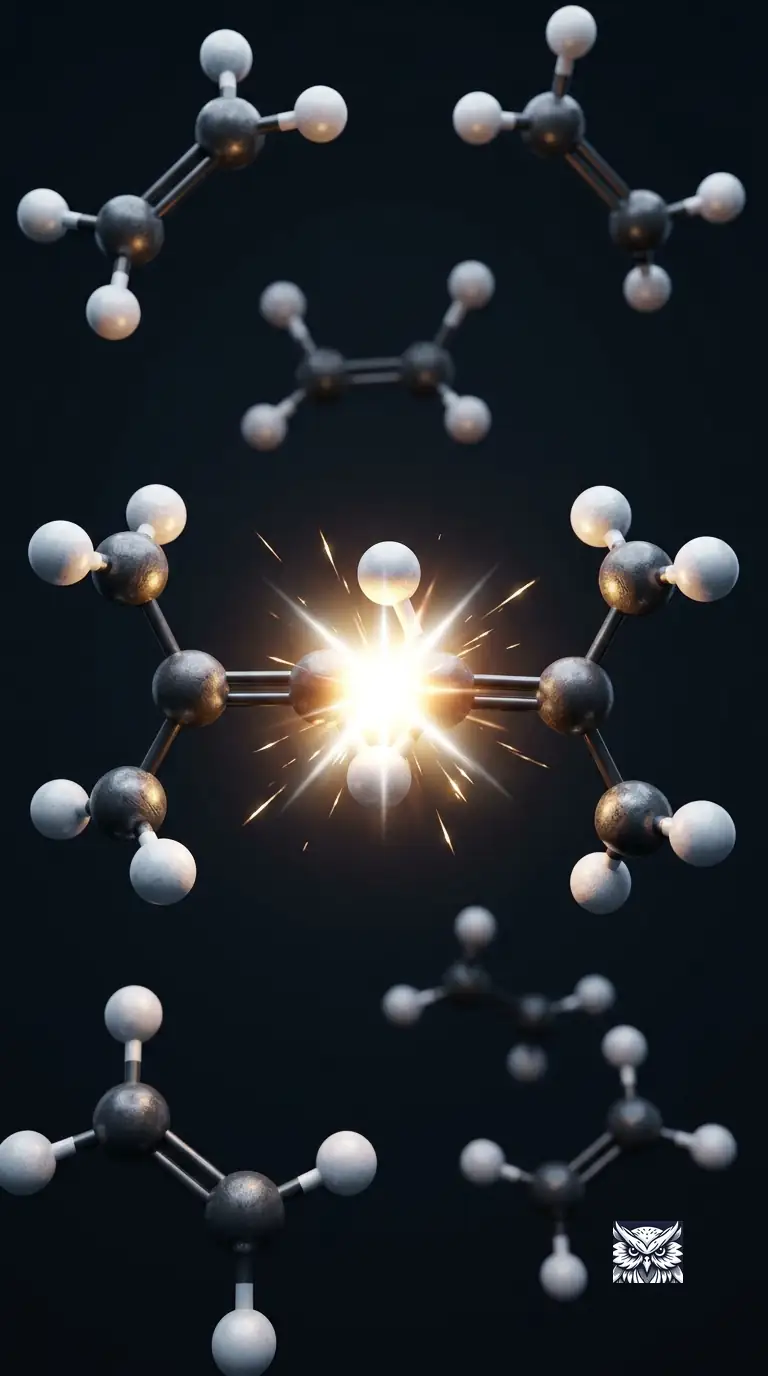
Chemical Kinetics
A chemical reaction can release a massive burst of energy and yet take millions of years to actually happen.
Chemical kinetics is the science of reaction speed. It explains why some reactions happen in nanoseconds while others are trapped in kinetic slow-motion.
At the microscopic level, molecules are constantly slamming into each other like bumper cars. Yet most collisions bounce off "harmlessly" because a reaction requires exact physical orientation and a minimum energy threshold known as "activation energy".
Crank up the temperature, and molecules hit harder and more frequently, sending the reaction rate skyrocketing. Add a catalyst, and it carves out a molecular shortcut that slashes the required energy barrier (without getting consumed itself).
This high energy wall is the only reason a diamond on a ring isn't instantly collapsing into ordinary pencil lead. Thermodynamically, diamond converting into graphite is energetically favored and "technically" happening right now. But because the activation energy barrier is ridiculously high at room temperature, that breakdown takes billions of years to occur.
Without biological catalysts slashing energy barriers inside you right now, digesting a single meal would take over fifty years!
2-Day Crash Course.Master this Chapter.
Click here.
Electromotive Force
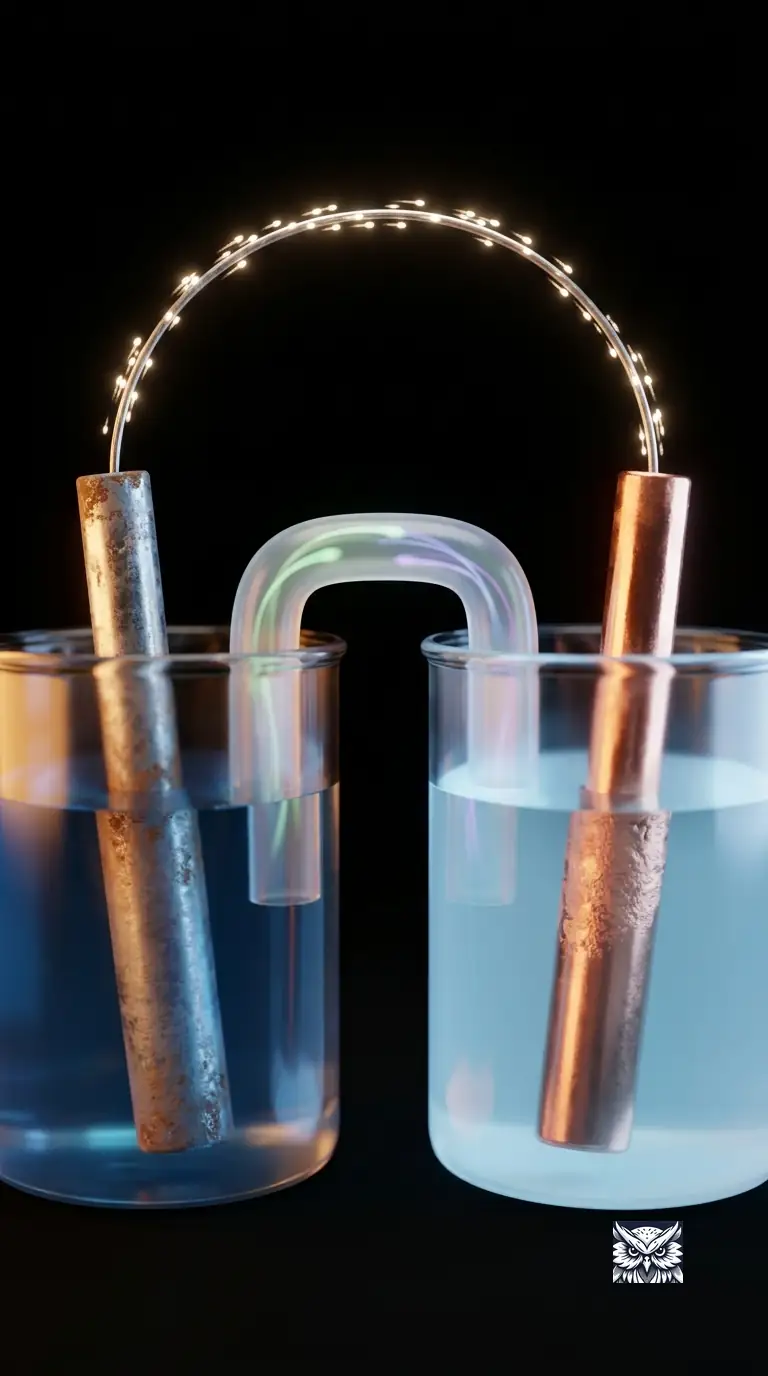
Two beakers, two different metals — and electrons start flowing through a wire with no wall socket involved.
Electromotive force is the pressure generated when two chemical species fight for electrons.
The zinc bar sits in one beaker of zinc-sulfate solution, the copper bar sits in a separate beaker of copper-sulfate solution. Left alone, each behaves independently.
Zinc dissolves into its own solution as positive ions (Zn²⁺), leaving behind surplus negative electrons on the zinc bar. Those electrons have nowhere to go — until the external wire gives them a path to the copper bar.
At the copper bar, incoming electrons grab hold of copper ions (Cu²⁺) from the solution and deposit them as solid copper. The salt bridge in the middle quietly completes the circuit, letting ions migrate between the two beakers to keep both solutions electrically neutral as the reaction runs.
Your smartphone battery is packed with immense chemical energy (Electromotive Force). Why is it not discharging instantly? Why does it last all day?
2-Day Crash Course.Master this Chapter.
Click here.
Redox Reactions
Why does chemistry give an entire chapter to something as small as one atom handing an electron to another?
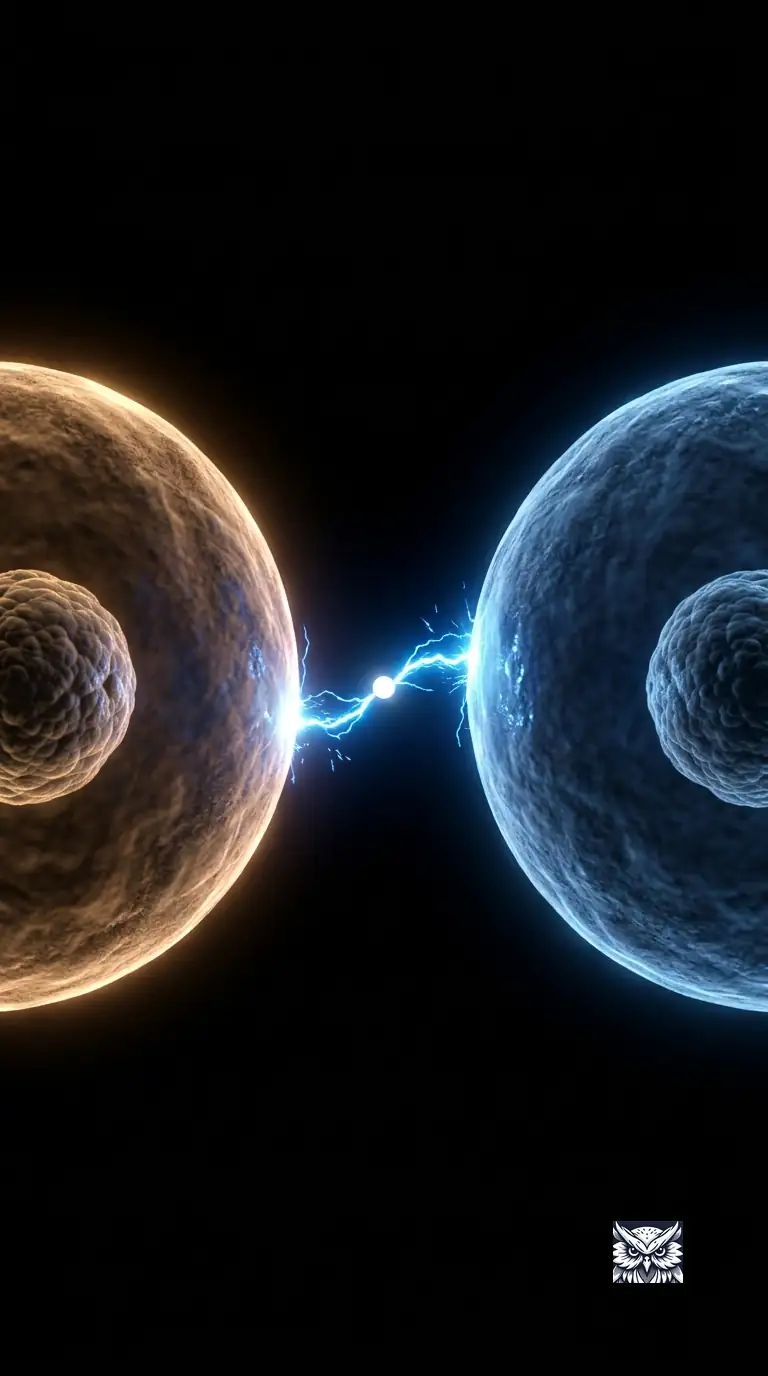
"Redox" is a combination of two words: Reduction and Oxidation. It is just the transfer of electrons between atoms/ molecules - as simple as that!
Ever wonder what actually happens when wood burns or an iron nail rusts? It all comes down to a microscopic game of pass-the-electron.
When an atom gives up an electron, chemists say it gets "oxidized". But where does that lost electron actually go? It instantly gets snared by a neighbor atom, which gets "reduced" in the process.
So why does this subatomic trade matter to you? Because it's the exact engine keeping you alive right now. Your cells slowly strip electrons from the food you eat and hand them to the oxygen you breathe. That controlled electron drop releases the steady energy that powers every single thought, step, and heartbeat.
You (i.e. your thoughts, your body, your emotions) are just non-stop redox reactions. More specifically, just a temporary delay in electrons flowing from food to oxygen. Can I describe you as a slow-motion chemical game of passing energy back to the universe?
2-Day Crash Course.Master this Chapter.
Click here.
Solid and Liquid States
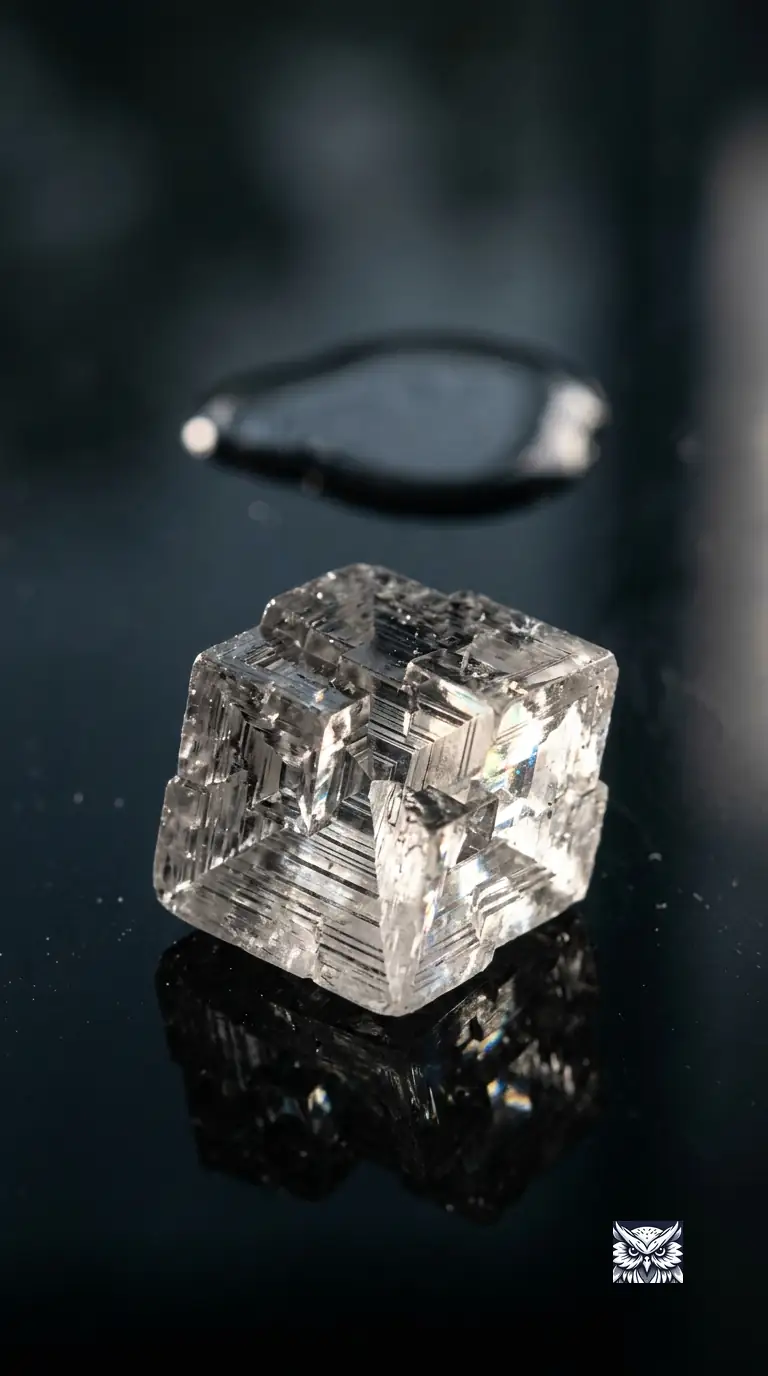
Nobody carved this raw crystal's razor-sharp, flat faces - so why did it grow with such exact geometry?
The state of a solid or liquid depends on how its atoms are organized.
Liquids flow because their molecules are disordered but free to slide past each other. In glass, the molecules are similarly disordered but not free (they are frozen solid). Crystals however are perfectly ordered - they lock into a beautiful repeating 3D geometry.
Look closely at a grain of salt. You will find razor-sharp, geometric shapes. Why does that happen? Because salt is a crystal.
What is a crystal? In crystals, atoms stack into an infinitely repeating 3D grid called a lattice.
What actually happens when you hit a crystal with a hammer? Because the crystal has uniform grid (like a 3D cube), it breaks cleanly along a geometric plane.
But if you break a glass window, it will shatter into random, curved pieces with no structure. Why?
Because glass is not a crystal. When molten glass freezes, its atoms get trapped in a jumbled, liquid-like arrangement before they can build a neat grid.
That missing internal symmetry is why glass melts gradually over a temperature range, while true crystals melt at one precise degree.
Two solids can feel identical even though one maybe built on perfect internal order while the other is just frozen chaos. Are "you" (your body) "carefully geometrically structured" by "design" (like crystals) — or are you just random chaos that figured out the best arrangement through repeated trial-and-error over millions of years?
2-Day Crash Course.Master this Chapter.
Click here.
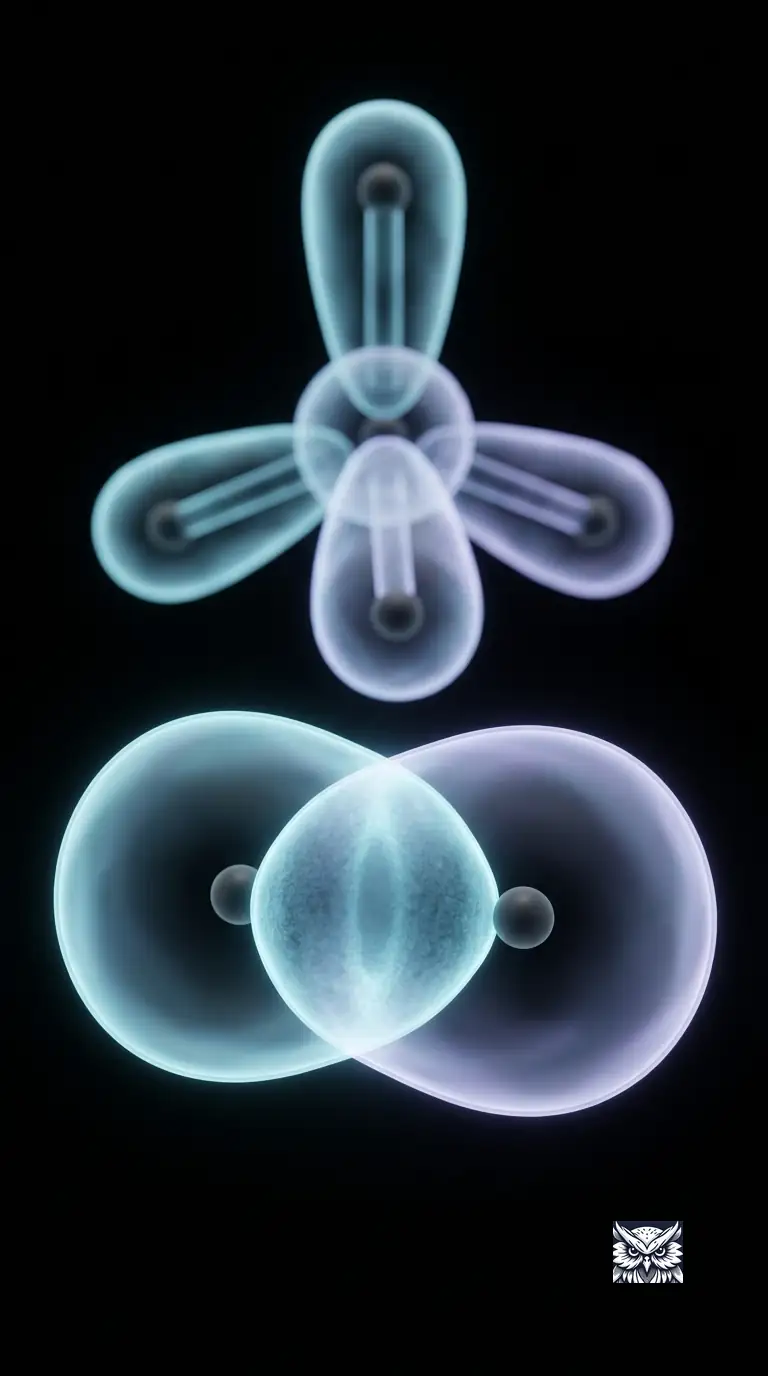
Chemical Bonding & Molecular Structure
How does geometry of chemical bonds decide whether a molecule builds life or stays dead matter?
A chemical bond is the attractive force that locks atoms together into stable molecules (by sharing or transferring electrons). Molecular structure is the 3D geometric shape those bonded atoms form based on the repulsive forces between their electron clouds.
Look at two atoms sharing electrons to build a covalent bond. Why don't those shared electrons just crowd together anywhere they want?
Turns out, negatively charged electron pairs intensely repel each other and demand "maximum personal space". So what happens when a central atom forms four identical bonds, like in methane? They spread out into a 3D pyramid shape called a tetrahedron to keep those electron pairs as far apart as physically possible.
But sometimes a molecule has unbonded "lone pairs" sitting on one side. In a water molecule, oxygen's two invisible lone pairs push with extra repulsive force, bending the hydrogen atoms into a crooked 104.5° angle.
Is that crooked bend important?
Yes. Incredibly important.
Without that bend, water wouldn't be polar.
No polarity means no hydrogen bonds.
No hydrogen bonds means ice wouldn't expand when it freezes—it would sink.
Oceans would freeze solid from the bottom up, killing all marine life.
That one microscopic 104.5° angle is literally the only reason Earth isn't a dead, frozen rock.
"Incredibly important" is an understatement!
How much of biology is just geometry?
2-Day Crash Course.Master this Chapter.
Click here.
Inorganic Chemistry

Classification of Elements
The Periodic Table isn't just a reference chart — it's a cheat code for the entire physical universe. Why does a grid of 118 squares predict how every atom in the universe will react before you even touch it?
We classify elements using the Periodic Table. The repeating pattern, known as periodicity, groups elements with identical outer electron configurations into predictable chemical families.
But how does this grid actually organize the elements?
Everything is ordered by atomic number and how electrons fill up the shells around each nucleus.
But why do elements in the exact same vertical column act like twin siblings?
Because they carry the same number of outer valence electrons, which is why both sodium and potassium explode violently in water.
What happens as you step sideways across a horizontal row instead?
Adding just one extra electron at a time completely transforms an element's personality from a reactive metal into a quiet gas.
Back in 1869, Dmitri Mendeleev trusted this pattern so deeply that he left blank spaces for undiscovered elements and wrote down their exact properties in advance. When chemists discovered gallium years later, its weight and density matched his predictions almost perfectly, proving nature runs on strict atomic logic.
A chart built from patterns alone could predict elements nobody had ever seen. Could we use the power of AI classification to discover more new "unseen" phenomemenon/ physics/ molecules/ drugs/ materials?
2-Day Crash Course.Master this Chapter.
Click here.
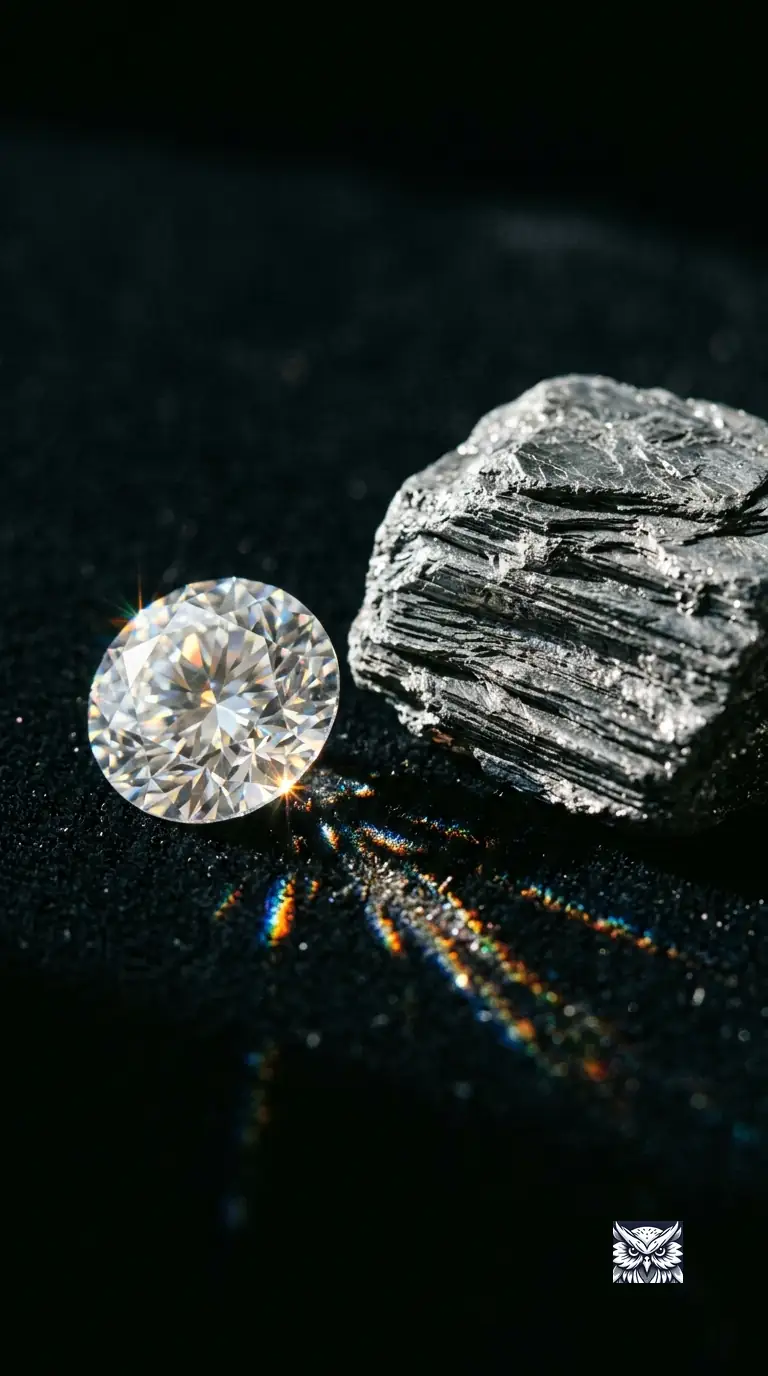
p-Block Elements
How is it possible that the exact same carbon atoms build both a "soft" pencil tip and an "unbreakable" diamond?
The "p-block" is the dynamic right side of the Periodic Table where outer electrons fill p-orbitals.
Ever wonder how a sparkling diamond and a pencil tip are made of the exact same element?
Both are 100% pure carbon, yet one cuts through solid rock while the other rubs off on paper.
How can identical atoms produce such wildly opposite physical properties?
It all comes down to geometry. In diamond, every carbon atom locks onto four neighbors in a ultra-rigid 3D pyramid lattice. But in graphite, atoms bond with only three neighbors to form flat 2D sheets that slide past each other effortlessly.
But that's not all. In 1985, chemists discovered 60 carbon atoms locked into a hollow ball shaped like a microscopic soccer ball. And in 2010, scientists isolated graphene: a sheet one atom thick that is stronger than steel.
This extreme structural versatility is why p-block elements build everything from your DNA to advanced microchips.
If carbon can become either a "soft" pencil lead or an "unbreakable" diamond, based solely on how the internal atoms connect, is geometry and structure more important than the Periodic Table? Are we sure that the Periodic Table does not give us a false confidence of deep understanding?
2-Day Crash Course.Master this Chapter.
Click here.
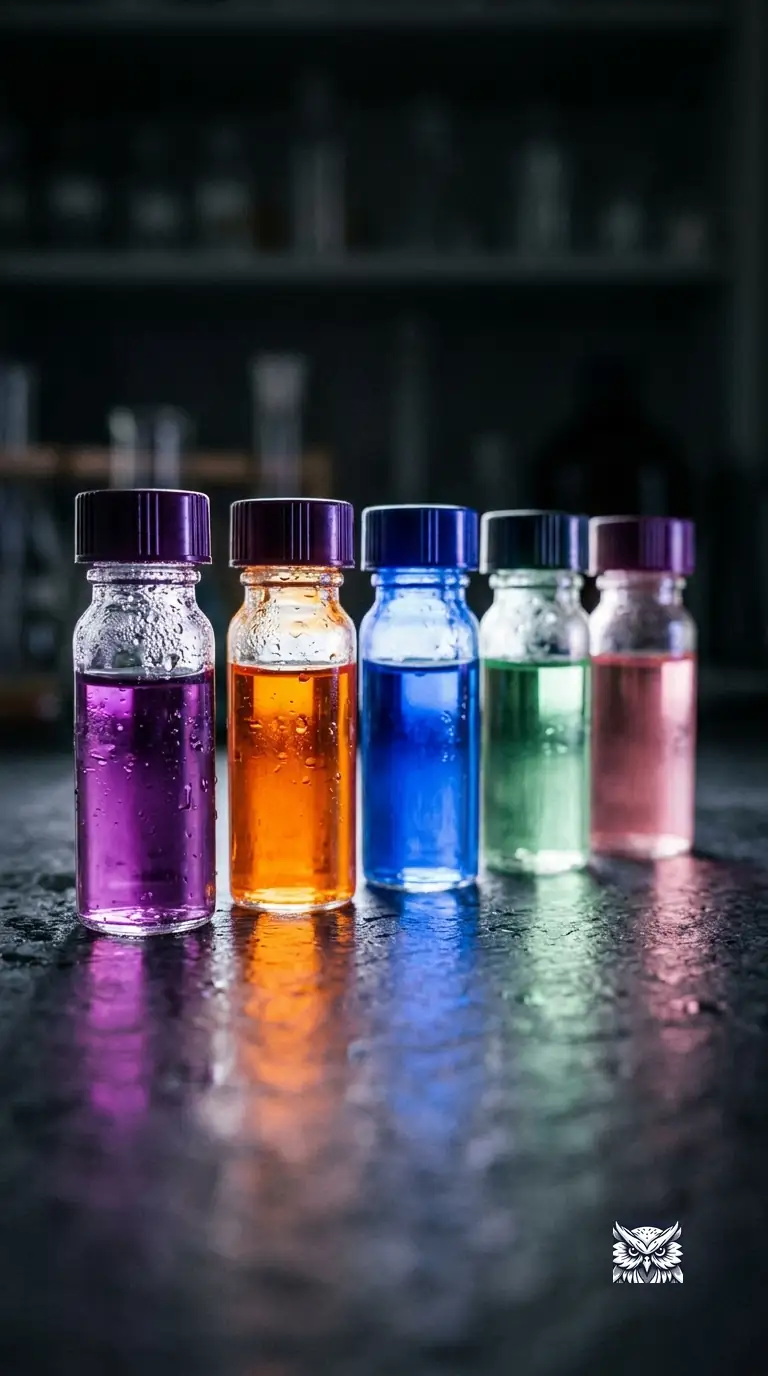
d- and f-Block Elements
Your blood, rubies, and various chemical solutions get their intense, vibrant colors from the same electronic structure game nature plays.
The d- and f-block elements — known as transition and inner-transition metals — fill the inner d- and f- electron subshells rather than outer valence shells. This gives them the power to absorb specific colors. Why?
Look at these vials. Deep purple, bright orange, vivid blue, soft pink — every single one comes from a transition metal doing something no other part of the periodic table can quite do.
Why are transition metals like iron, copper, and chromium so ridiculously colorful?
It all comes down to their partially filled d- (or f-) orbitals. When surrounding atoms or molecules lock onto a transition metal, they split those orbitals into higher and lower energy levels. When ordinary white light passes through that solution, an electron absorbs a specific wavelength of light to jump between those split levels, leaving the remaining complementary colors to enter your eyes.
Want to know where else this exact transition metal trick is running right now? Deep inside your own body. An iron atom sits at the center of every hemoglobin complex, absorbing light and turning your blood "blood red in color".
What happens after atomic number 118? The outer electrons move so close to the speed of light that normal chemical rules start to break. Special relativity kicks in. Does periodic law still hold past 118? We dont know.
2-Day Crash Course.Master this Chapter.
Click here.
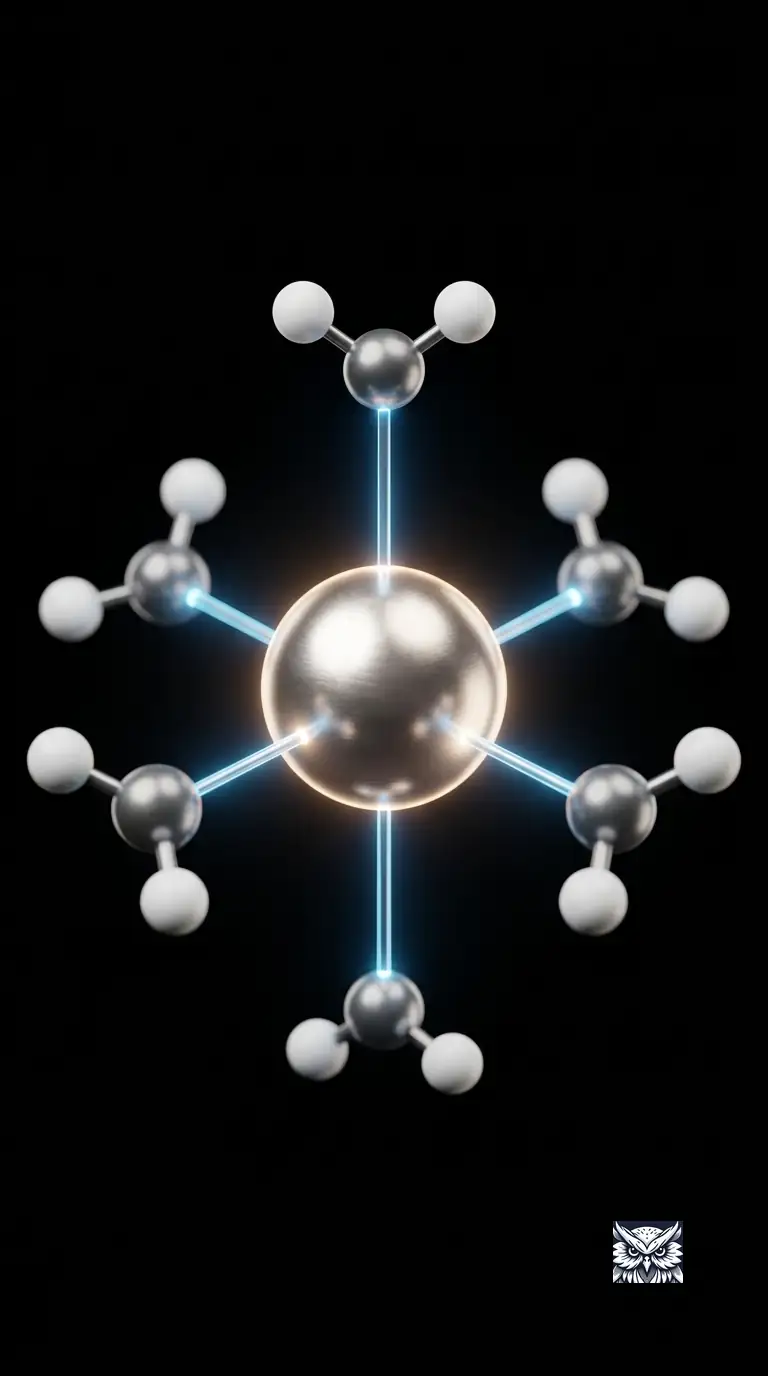
Coordination Compounds
A single metal atom, gripped from every direction by six other molecules in perfect symmetry — a molecular chandelier.
What is a coordination compound? A coordination compound consists of a central metal ion surrounded by molecules or ions called ligands. Each ligand "donates" a full pair of electrons to the metal, creating "coordinate covalent bonds".
Imagine a central metal atom suspended like a chandelier inside a perfectly symmetrical cage of surrounding molecules. This isn't a standard molecule — it's a coordination complex.
But how do those surrounding molecules, called ligands, attach to the metal without sharing electrons back and forth? Turns out, the central metal accepts electron "pairs" from each ligand.
OK fine but why does this matter?
It allows transition metals to build hyper-specific 3D geometric cages.
In 1965, scientists accidentally discovered a coordination compound that stops cancer.
But how does a tiny metal structure stop a deadly tumor?
The platinum atom sheds its chloride ligands to bind directly to cancer DNA, physically jamming its replication machinery.
If one accidentally-discovered platinum complex went on to save millions of lives, how many more world-changing compounds are still sitting undiscovered in some lab's leftover glassware?
2-Day Crash Course.Master this Chapter.
Click here.
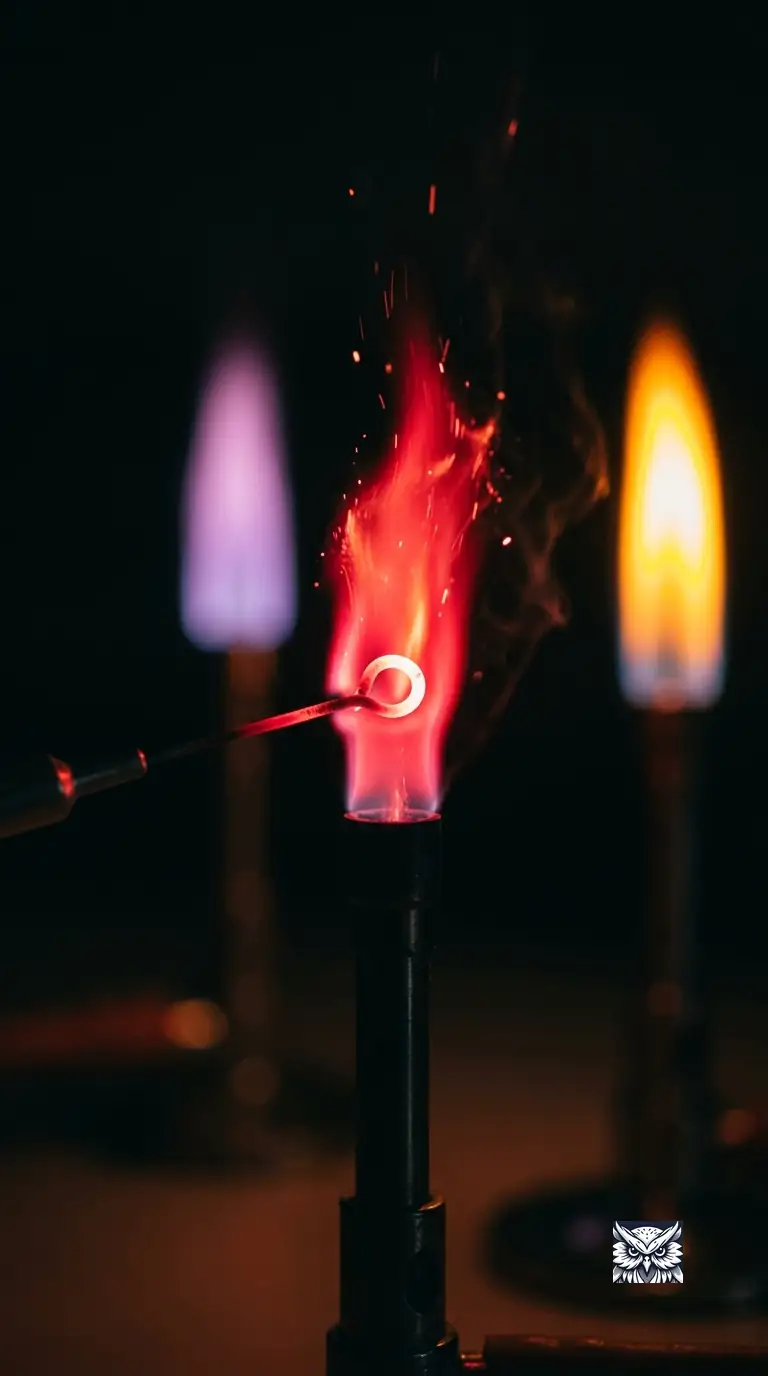
Qualitative & Quantitative Analysis
The colour of a tiny flame can tell us what a star trillions of miles away is made of.
Chemical Analysis is the art of making the invisible suddenly measurable.
Look at this flame. A metal salt is burning crimson-red — and that one exact colour is enough to identify precisely which metal is in the sample, no other test required.
Every element's electrons absorb and release very specific amounts of energy, which shows up as very specific colours of light — a kind of fingerprint written in fire. Chemists have used this trick, called a flame test, for well over a century to identify unknown substances just by burning a speck of them.
That exact same trick, scaled up, is how astronomers know what distant stars are made of. Starlight carries the same telltale colour fingerprints across trillions of kilometres of empty space, letting scientists read the chemical makeup of objects they will never physically touch.
The art of objective, "unconditioned" observation needs constant training and practice. It is crucial to all fields of life.
2-Day Crash Course.Master this Chapter.
Click here.
Organic Chemistry
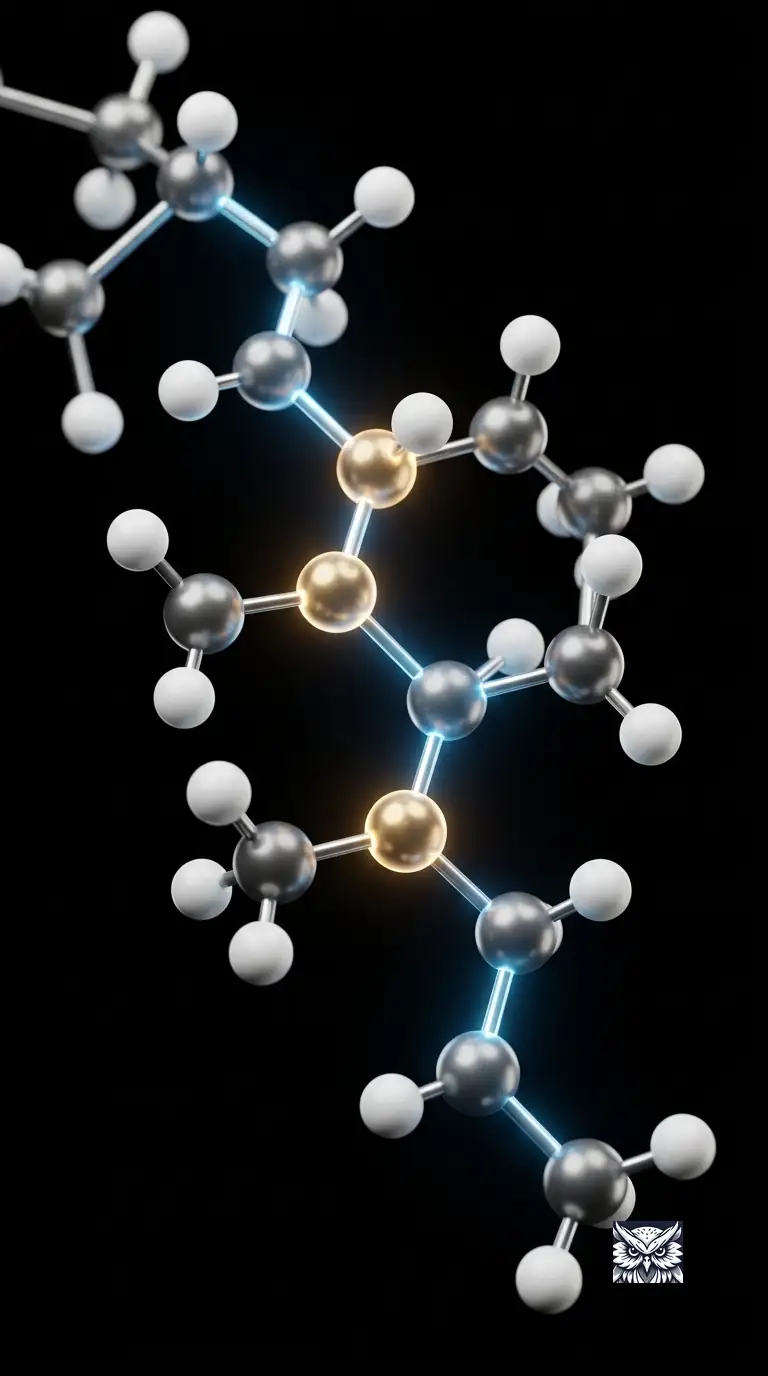
IUPAC Nomenclature
Could using the wrong name cost someone's life?
Nomenclature comes from the Latin roots "nomen" (name) and "calare" (to call), meaning a systematic set of names. But why did the entire world have to stop everything and agree on a strict code to name molecules?
Look at this molecule. Its branches fork in specific places. That geometric difference is sufficient to generate its unique IUPAC name, with zero ambiguity.
That's the entire point of IUPAC nomenclature. Every possible molecule gets exactly one correct name. Two chemists on opposite sides of the planet, will independently write the identical name.
Before this system existed, chemists just made up names as they went. One compound could pick up a dozen different nicknames. Pharmacists occasionally mixed up different drugs that just happened to share a common name. The mess got so dangerous, that chemists finally standardised everything in 1892.
IUPAC names are not simple labels. They are tiny algorithms (or programs).
2-Day Crash Course.Master this Chapter.
Click here.
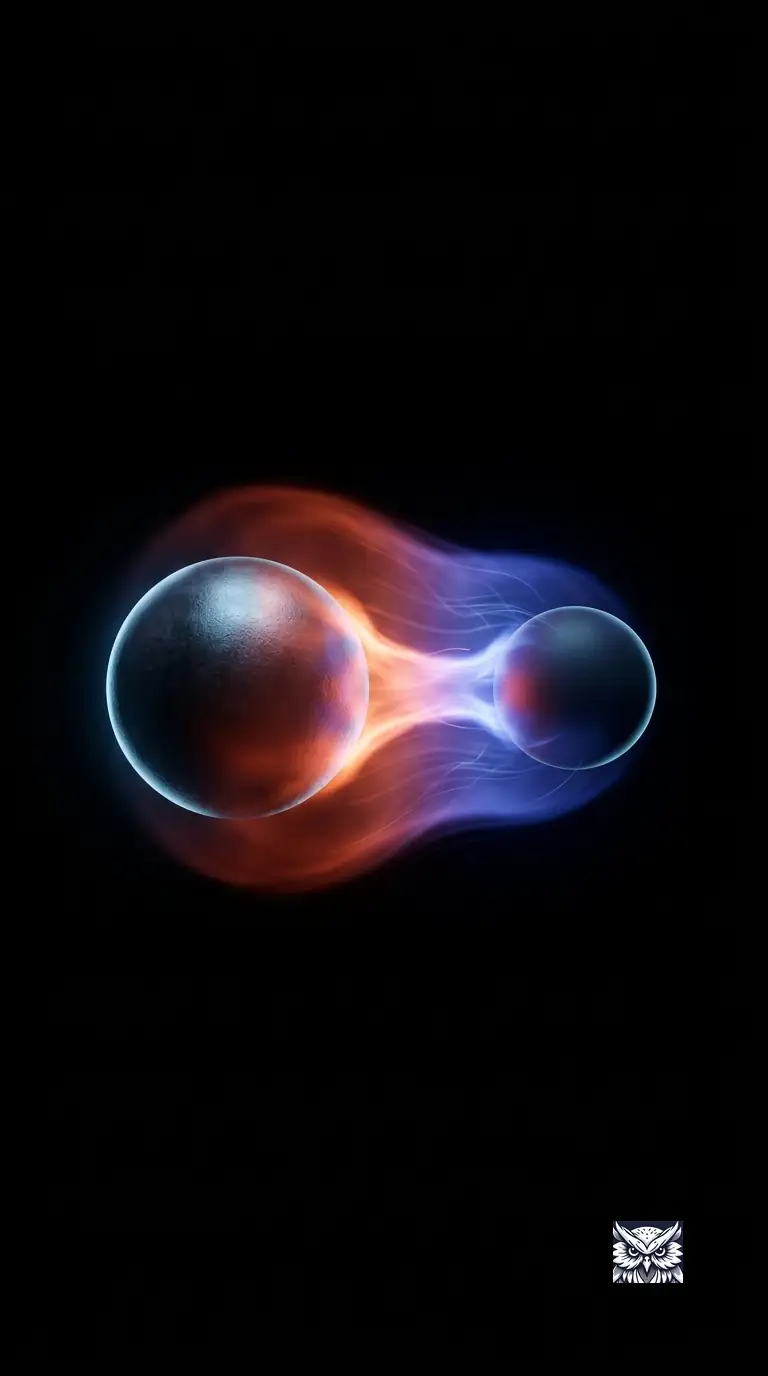
Electronic Effects & Bonding
Why does nothing stick to a teflon-coated non-stick pan?
Look at this bond. This bond isn't shared evenly — the electron cloud sits visibly closer to one atom than the other.
Imagine two friends sharing a blanket, but one person hogs almost all of it. When two different atoms share electrons, the greedier atom pulls that electron cloud closer to itself.
What happens when this uneven pull shifts electron density down a chain of atoms? It can make some acids far stronger, or make certain bonds super easy to break.
This is how sticking actually works: it's a much weaker pull between molecules, caused by tiny, random shifts in an atom's electrons. Stop those shifts, and you stop the sticking.
That's exactly what Teflon does. Teflon (PTFE) is a giant polymer: thousands of carbon atoms bonded in one long zigzag chain, each carbon carrying two fluorines. Coat a pan with Teflon, and that carbon chain sits completely wrapped in fluorine, on top of the metal.
Fluorine holds its electrons so close and so tight that they barely shift at all, no matter what's nearby. So food, oil, and water never touch the carbon chain or the metal pan underneath — the only thing they ever meet is fluorine. And since fluorine's electrons are held too tight and too still to pull on anything else, food, oil, and water find no imbalanced electron clouds to get attracted to. That's why the pan stays non-stick.
Be like Teflon. Your internal focus and energy should be so high that no external situation or opinion can cling to you.
2-Day Crash Course.Master this Chapter.
Click here.
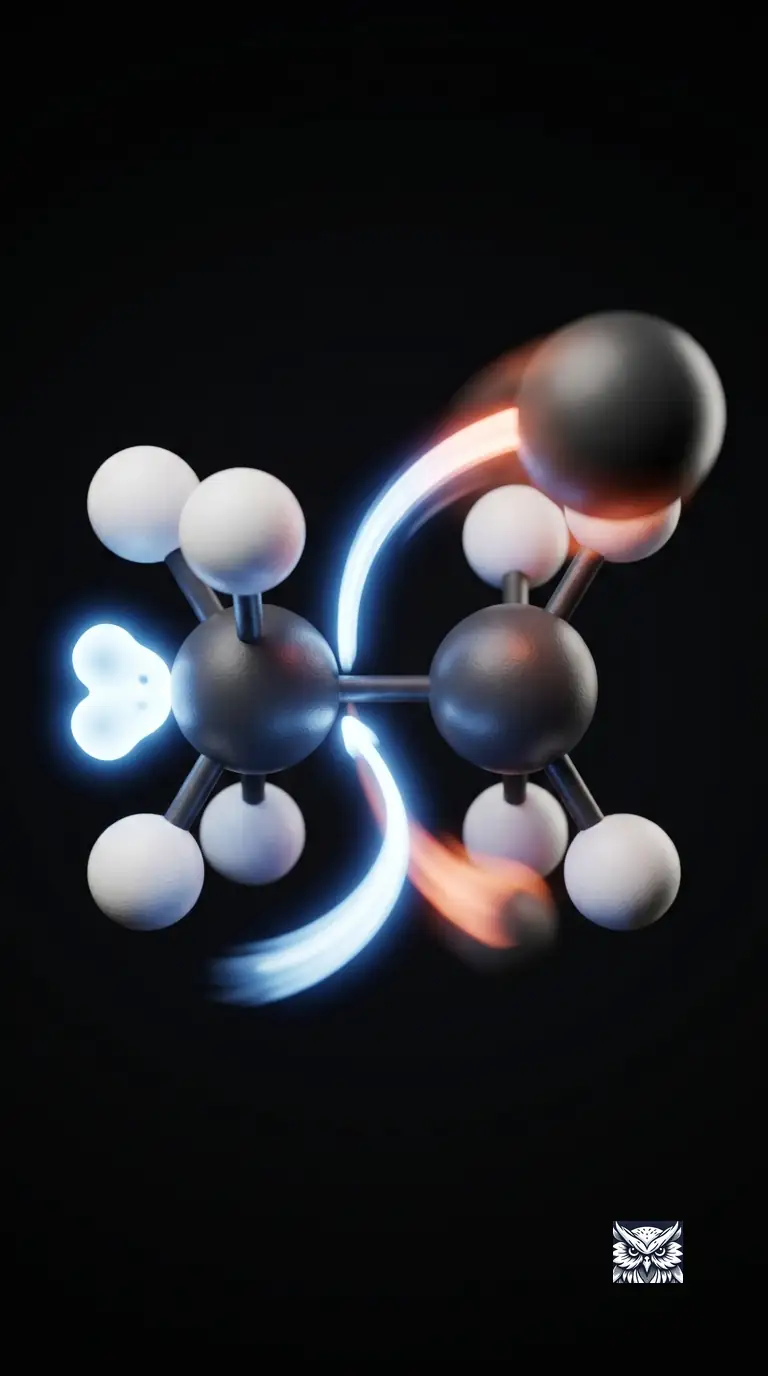
Reaction Mechanisms
How can you be sure how something happened if nobody was there to see it?
A reaction mechanism is the step-by-step path electrons take.
Picture watching a magician pull off a trick, but their hands move way too fast to follow.
In a chemical reaction, electrons switch molecules in a tiny fraction of a second. Nobody can actually see this happen. So, how do we figure out where and how electrons are jumping?
We play forensic detective. By swapping normal atoms for heavier isotopes, we track how tiny speed changes expose the electron's path. Pretty wild, right?
But what if you could slow down time and catch the electrons in the jumping act red-handed? In 2023, scientists won a Nobel Prize by creating lasers that flash in attoseconds — a billionth of a billionth of a second. Now, we can finally watch the invisible electron dance in real time.
If humanity spent over a century guessing how electrons move, how much of science is built on "lucky guesswork"?
2-Day Crash Course.Master this Chapter.
Click here.
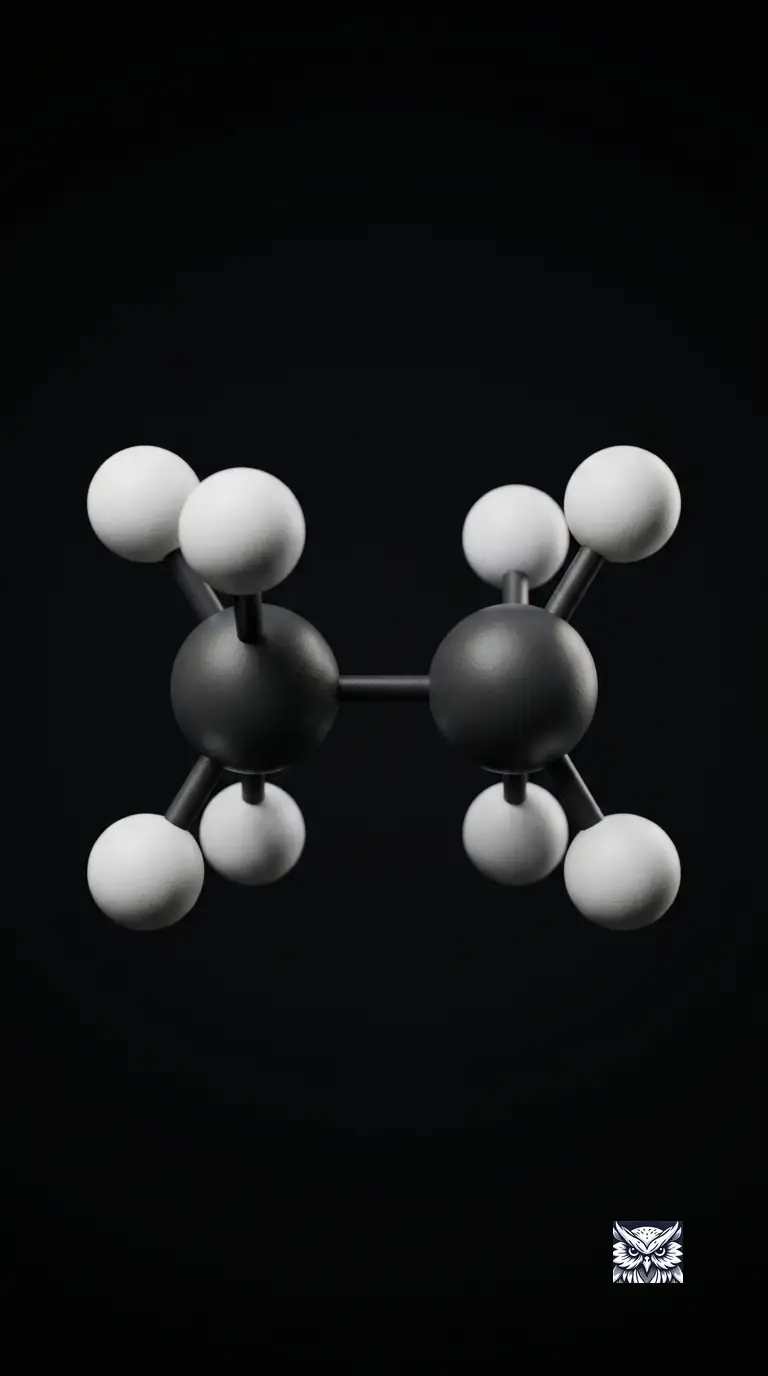
Alkanes
Why is being "boring" a massive superpower?
Because all the energy stays locked safely inside until we choose to release it.
Natural gas, petrol, and propane are all versions of "boring" alkanes.
What is an alkane? An alkane is a stable hydrocarbon held together by "single bonds" that keeps its energy locked safely inside.
They are almost completely unreactive under normal conditions. But they run human civilization.
It takes a sudden spark — a burst of activation energy — to break those calm bonds. Once triggered, that stored energy releases all at once. Pretty wild, right?
Is stability actually more powerful than reactivity? In chemistry and in life?
2-Day Crash Course.Master this Chapter.
Click here.
Alkenes
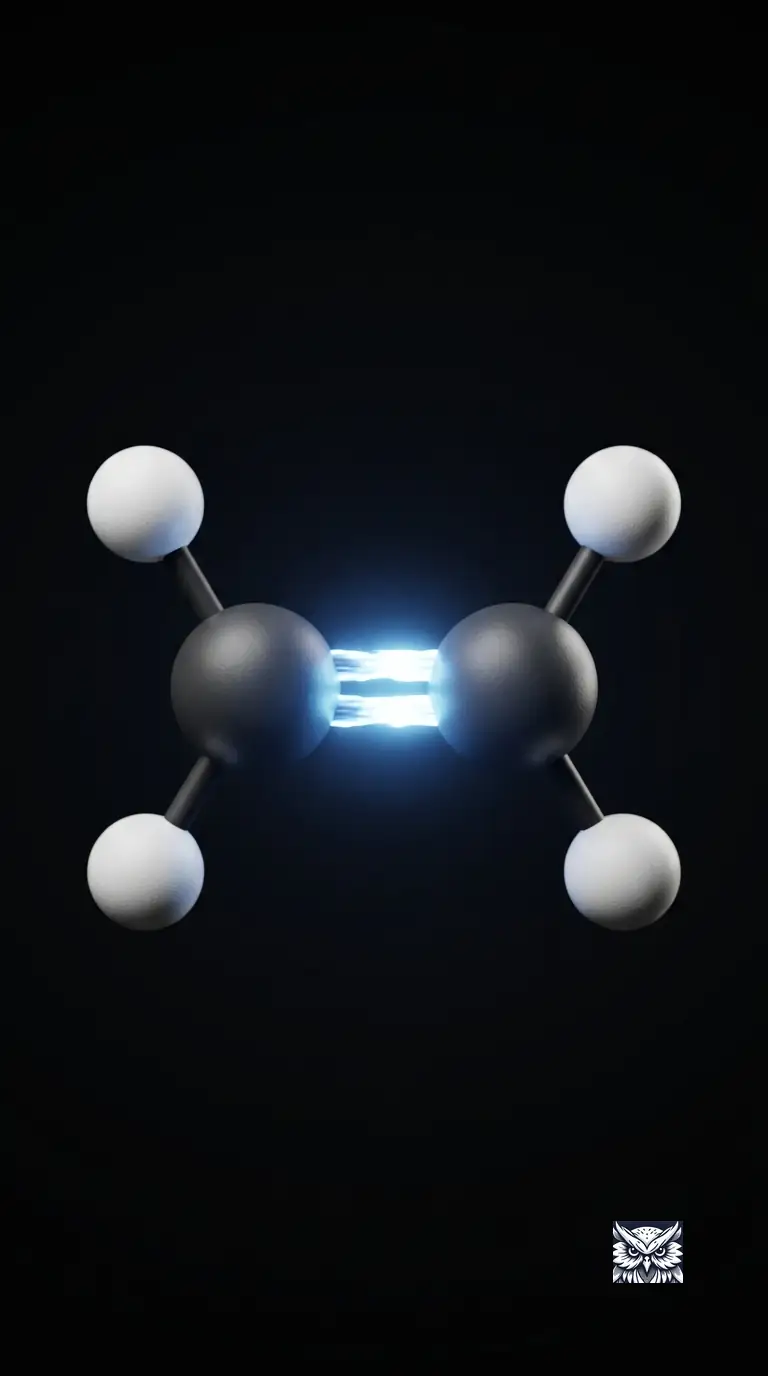
Unlike "boring" alkanes, alkenes have a double bond with exposed electrons.
This bond sits denser and brighter than an ordinary one — exposed electrons practically begging something to attack.
That's the double bond's whole personality: those exposed electrons make alkenes far more reactive than alkanes, especially the simplest one, ethene.
Plants release ethene as a hormone to trigger fruit ripening. That's why one ripe banana can ripen an entire bowl of fruit sitting next to it.
Ethenes also link together into long chains to make polyethylene (or polythene for short), the plastic that is killing Mother Earth slowly.
If the same alkene that ripens bananas also becomes plastic bag, are you starting to see "how looks can deceive"? Why you should not judge others based on how they look or talk?
2-Day Crash Course.Master this Chapter.
Click here.
Alkynes
Want to cut steel? Ask alkynes.
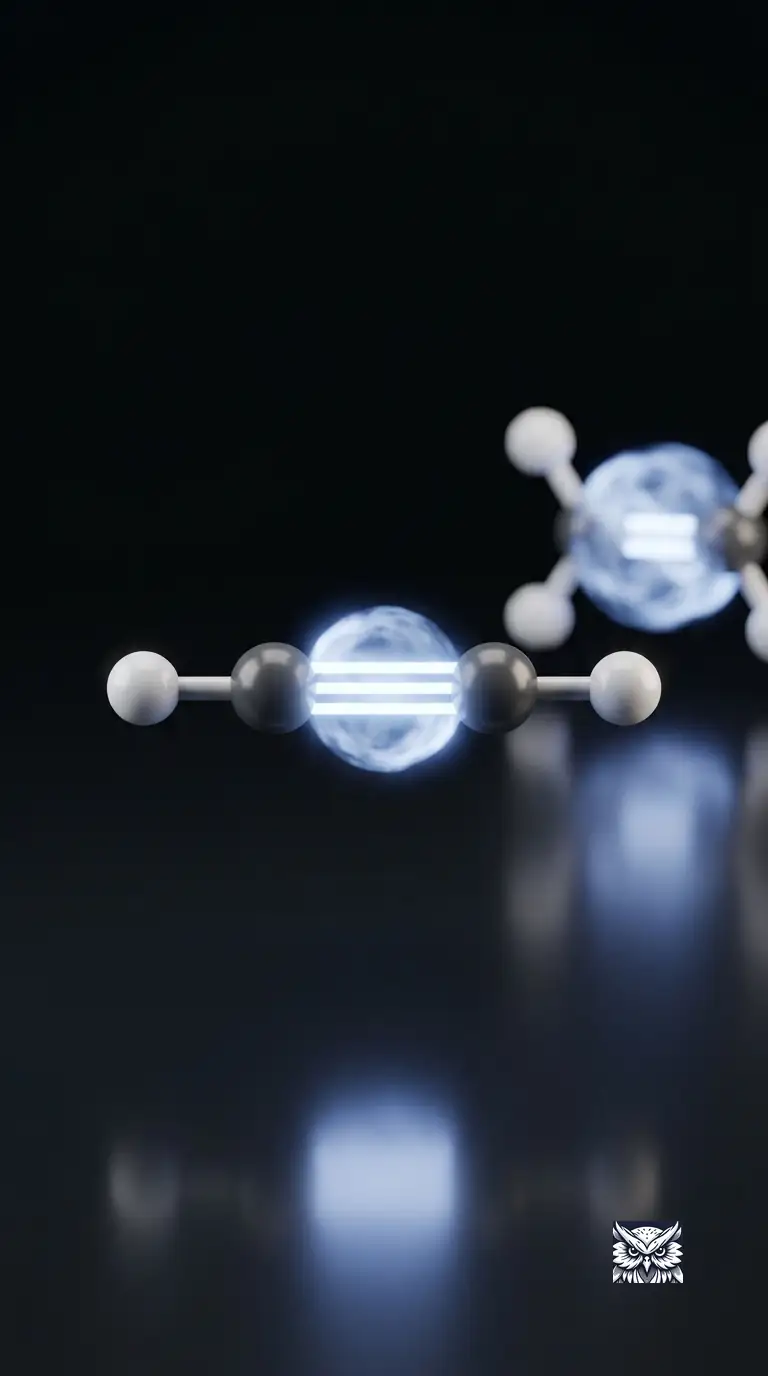
Alkynes are hydrocarbons containing a carbon-carbon triple bond — three shared electron pairs packed into a space meant for one, locking the molecule into an intensely energetic, rigid straight line.
What happens when you cram six shared electrons into a tiny gap? In the organic world, that extreme compression is an alkyne. It stores a massive reservoir of energy.
Single-bonded alkanes twist and bend freely. But a triple bond locks those carbons into an unyielding, rigid rod. When those tight bonds finally break during combustion, that stored tension snaps all at once.
Feed ethyne gas into a torch with pure oxygen, and it triggers a flame reaching 3,300°C. That is hot enough to slice through thick steel.
If cramming three bonds into the space of one is enough to melt steel on demand, how much more energy might still be hiding, concentrated, in structures nobody's thought to build yet?
2-Day Crash Course.Master this Chapter.
Click here.
Aromatic Hydrocarbons
Chemistry's most famous shape was discovered in a dream.
In 1865, August Kekulé figured out the shape of Benzene after dreaming of a snake biting its own tail.
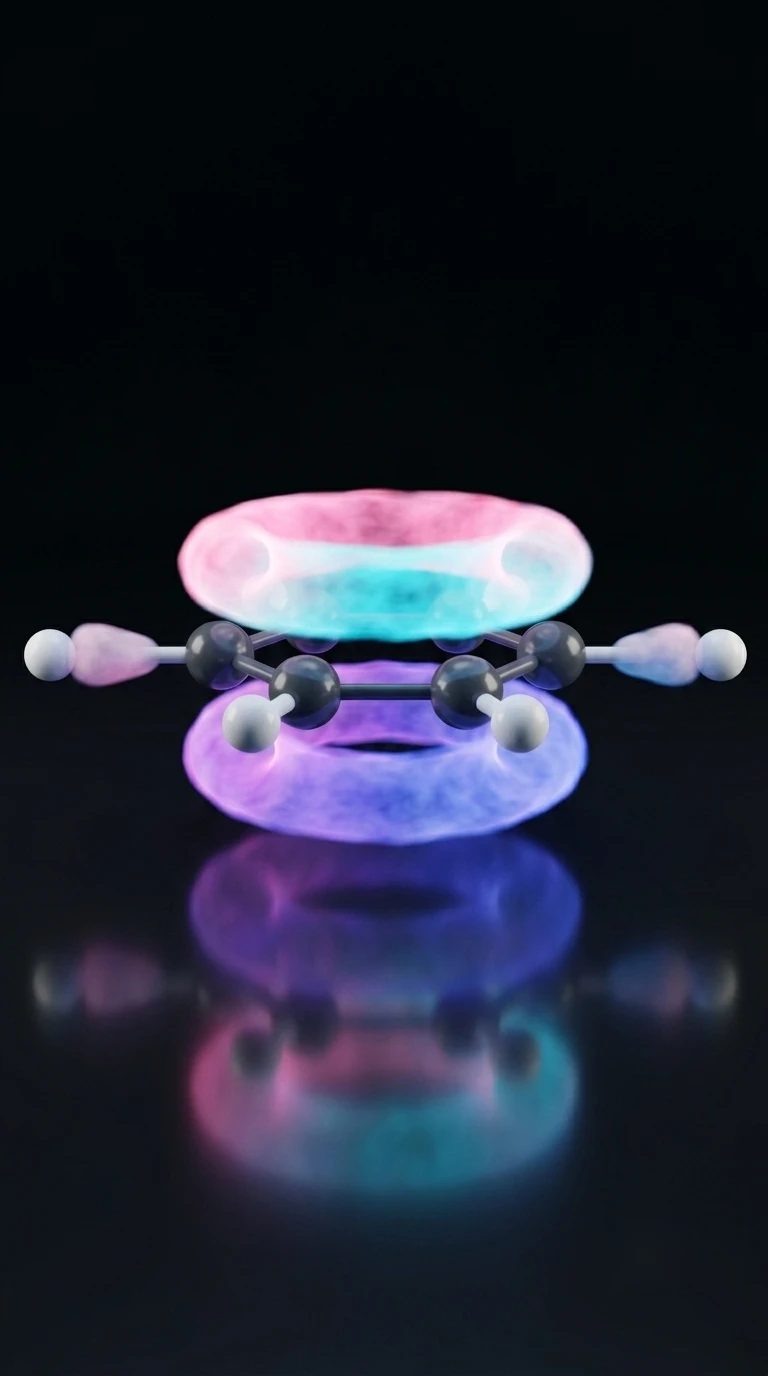
Aromatic hydrocarbons (like Benzene) gain their stability from a continuous cloud of electrons shared equally around a ring. The electrons are not locked in place between pairs of carbons. They smear out into a shared halo hovering above and below the entire ring. This is called delocalization. When electrons spread the energy evenly across the whole team instead of hoarding it in one spot, the entire structure becomes almost impossible to break.
Benzene's six carbons and six hydrogens "look" like a standard molecule with alternating double bonds. But the electrons aren't alternating between single and double bonds the way early chemists imagined it. They're delocalised, spread evenly around the whole ring, which makes the whole structure far more stable than a normal chain of alternating bonds should be.
Discovery is really just being open enough to perceive keenly. You need to sharpen your ability to perceive - not cram more knowledge into your heads.
2-Day Crash Course.Master this Chapter.
Click here.
Haloalkanes
How did a completely "harmless" haloalkane end up tearing open a hole in Earth's sky?
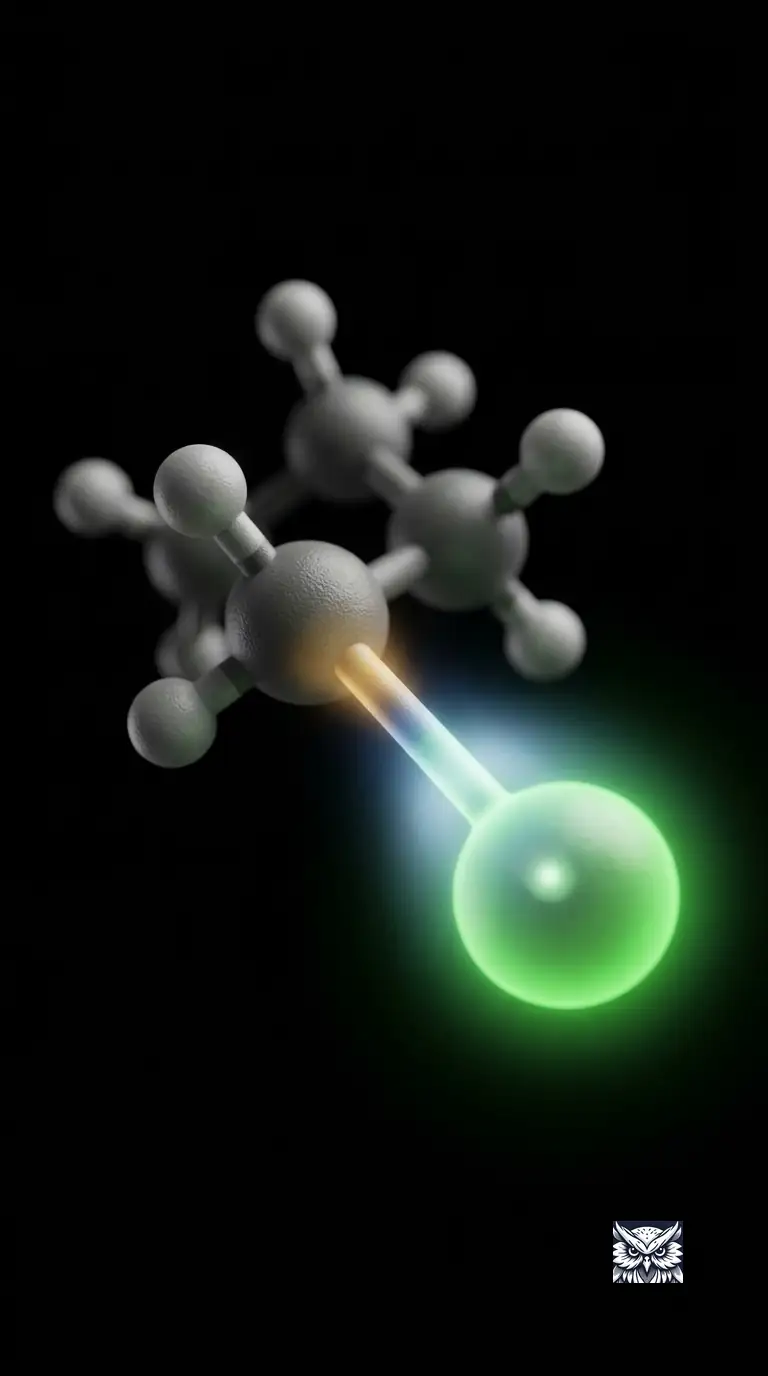
The Greek word "halo" means salt-former. Haloalkanes are hydrocarbons where a hydrogen atom has been replaced by a halogen atom (like chlorine).
Imagine slapping a halogen atom, like chlorine, onto a quiet carbon chain. That halogen atom (chlorine) is way greedier for electrons than others. It leaves the carbon exposed and vulnerable to chemical reactions.
But when you pack the same molecule with not only chlorine, but also fluorine (another halogen), then a dramatic shift happens. The molecule becomes inert. Water, air, or heat cannot break through that fluorine armor.
That's strange. It was extremely reactive with chlorine. But becomes inert as soon as fluorine comes in? Why?
This is because fluorine is tiny and grips carbon and its electrons with unmatched, bulletproof force. Packing the molecule with fluorine creates a dense electron shield around carbon, that fluorine just won't let go.
This made CFCs (chlorofluorocarbons) seem like the "perfect" safe gas for fridges and spray cans. They were non-flammable, non-toxic to humans, and completely unreactive in everyday air.
So, what happens to a gas that refuses to break down on Earth? It floats untouched into the stratosphere, where high-energy UV light finally shatters the chlorine bond. That shattered bond releases chlorine that aggressively tears through our ozone layer. Those holes in the ozone layer let high-energy UV rays from the Sun reach us unfiltered. That causes cancer.
In 1987, entire humanity got together and agreed to ban these particular haloalkanes (CFCs) forever. Our traumatized sky has been measurably healing ever since.
This story is a reminder to the scientific community to be humble. Whatever inventions we produce often come back to bite us. Innocent research pursuits have been misused by governments the world over to make bombs. And we still don't learn. We still continue pursuing science to kill each other.
2-Day Crash Course.Master this Chapter.
Click here.
Haloarenes
Why does toxic chlorobenzene (a haloarene) stay trapped in our soil and oceans for decades without ever breaking down?
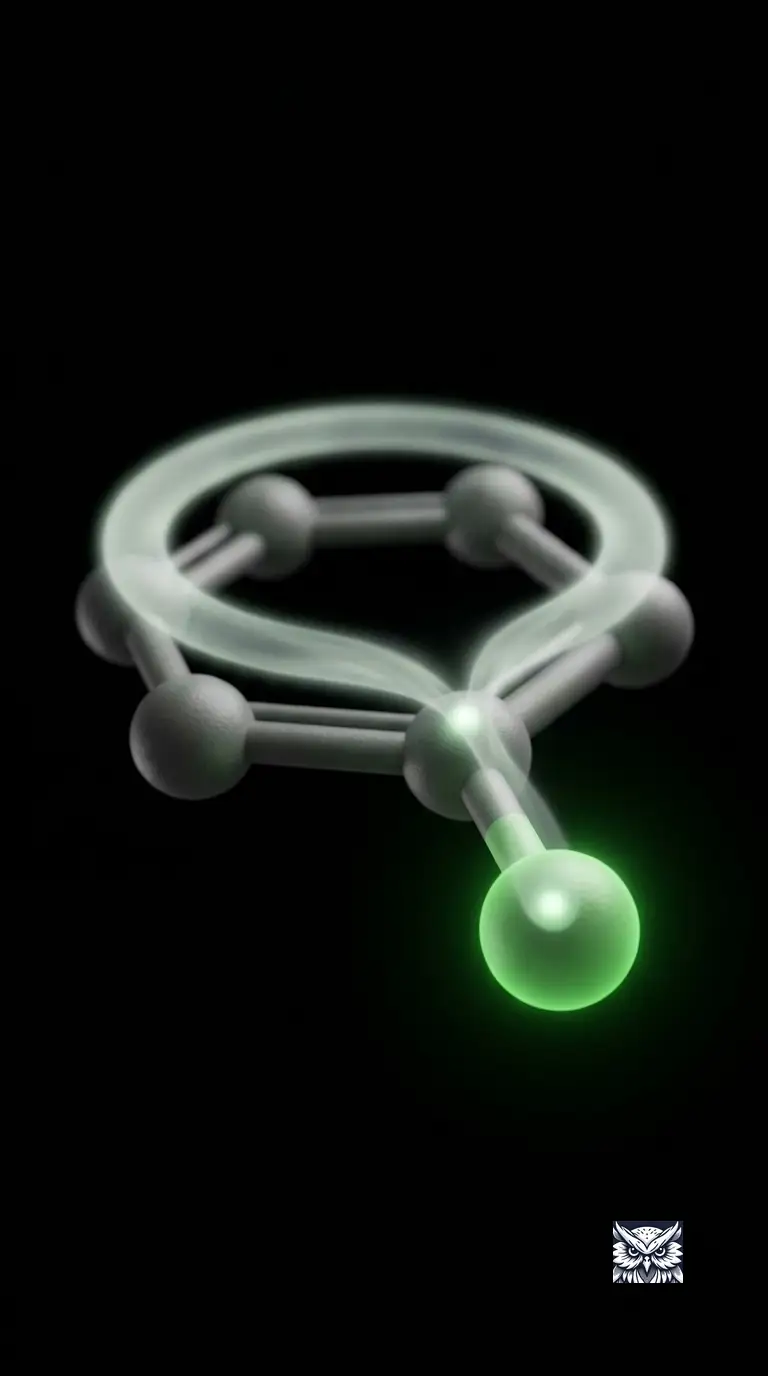
The word "halo" means salt-former and "arene" refers to an aromatic benzene ring. Haloarenes are molecules where a halogen (like chlorine) is attached directly to a carbon ring. But why does attaching a halogen to a ring turn an ordinary chemical into a stubborn pollutant?
Imagine attaching a chlorine directly to a benzene ring. Instead of pulling electrons away, chlorine spills its spare electrons into the ring's cloud. This electron sharing upgrades the carbon-chlorine "single bond" into a "partial double bond".
In regular double bonds (like alkenes), molecules react easily because they can simply open up without severing the atoms apart. But a chlorine atom cannot open up like an alkene — it must be completely detached to react.
What happens when a reaction requires you to completely tear off a double-reinforced bond? Severing both the single bond and the extra (partial) double-bond layer demands an immense amount of energy. Normal environmental conditions lack this energy. So, nature cannot pull the chlorine off. As a result, these pollutants linger in our ecosystem for generations.
The same "double bond" explanation makes one molecule (alkenes) more reactive and another molecule (chlorobenzene) less reactive. Chemistry is not illogical. It requires context and the full-story to understand. Stop memorizing.
2-Day Crash Course.Master this Chapter.
Click here.
Alcohols
A single sip of alcohol rushes straight into your brain within minutes, slowly damaging your ability to be alert (or learn new chapters). But your stomach takes many hours to digest food. Why?
Alcohols are hydrocarbons where at least one hydrogen is replaced by a hydroxyl group (-OH).
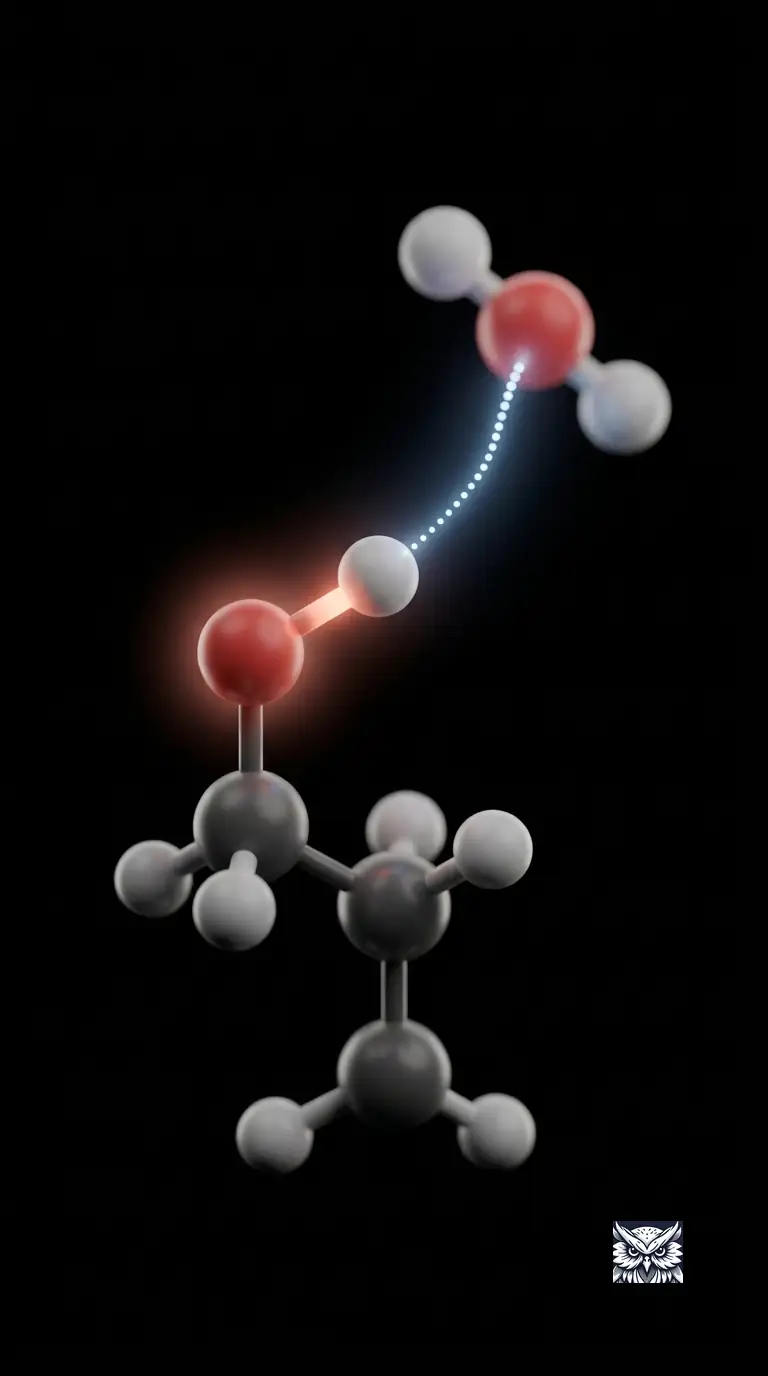
Look at an alcohol molecule like ethanol. It has an oxygen-hydrogen group attached to its carbon chain. Oxygen pulls electrons away from hydrogen, creating tiny positive and negative charges.
Water molecules carry this exact same charged pattern. So what happens when these two charged liquids meet?
Opposite charges attract, forming invisible bridges called hydrogen bonds. Unlike oils that lack charges and get pushed away, alcohol blends seamlessly into water's bridge network. Because your stomach lining and blood are mostly water, alcohol slips right through tissues without needing digestion.
Your bloodstream then rapidly carries these tiny, water-blended molecules to every organ. In minutes, those uninterrupted bridges let alcohol cross directly into your brain, playing havoc with your nervous system.
Alcohol makes your nervous system less alert. Never drink to look cool. By harming your nervous system, you are eventually harming your future earning capacity, and well-being.
2-Day Crash Course.Master this Chapter.
Click here.
Phenols
A whole chapter devoted to one molecule? I thought it's just another kind of alcohol?
Yes, but it's special. Phenol is a million times more acidic than ethanol. And the first real antiseptic.
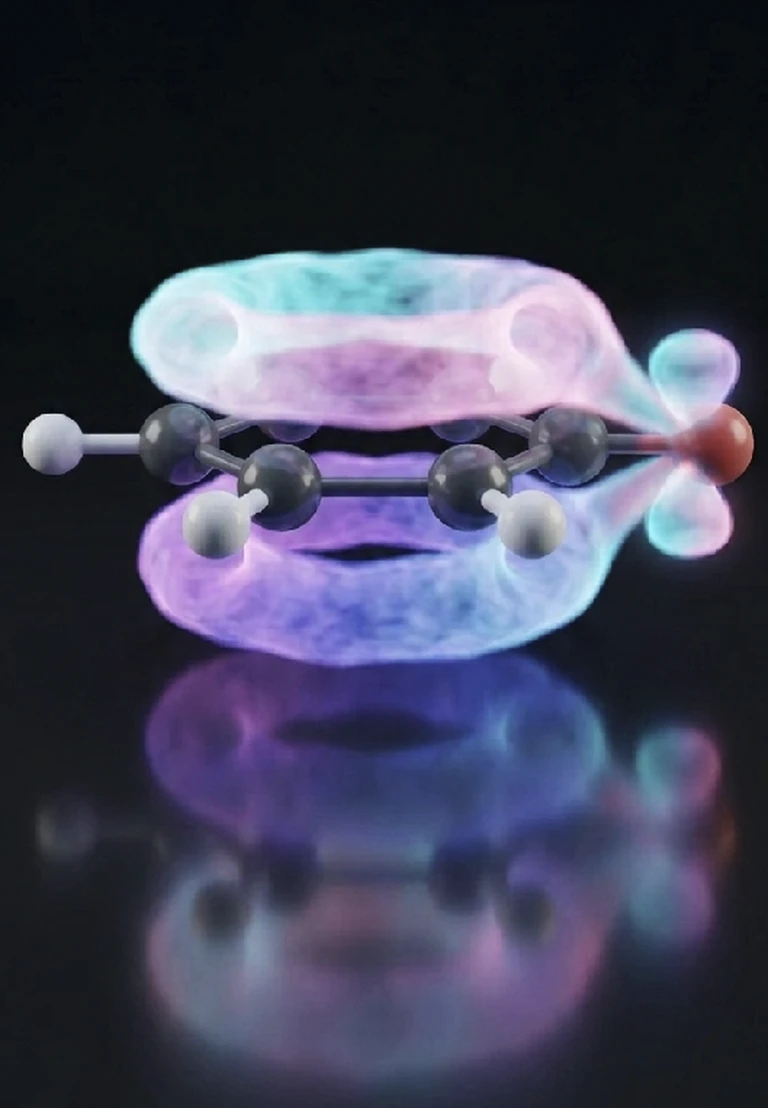
Phenols are molecules where a hydroxyl group (-OH) is bonded directly to benzene.
But why is it an antiseptic?
Look at what happens when a phenol molecule loses a hydrogen proton. It leaves a raw negative charge on the remaining oxygen atom. In an ordinary alcohol (like ethanol), that negative charge stays trapped on the oxygen, making the ion unstable. So why does a phenol molecule drop its proton so much more easily? It is because the attached benzene ring pulls that negative charge into its own electron cloud. Spreading the charge across the ring stabilizes the leftover ion, driving higher acidity. This higher acidity allows phenol to penetrate bacterial cell walls and break down their vital proteins. When doctors sprayed this liquid on surgical wounds, it rapidly destroyed deadly infections.
Phenol is strong because it is able to spread its "negative burden" across a wider network (benzene ring). Life lesson? Don't hold your negative thoughts to yourself until you break. Share with your support network.
2-Day Crash Course.Master this Chapter.
Click here.
Ethers
How did Ethers end thousands of years of human suffering during surgery?
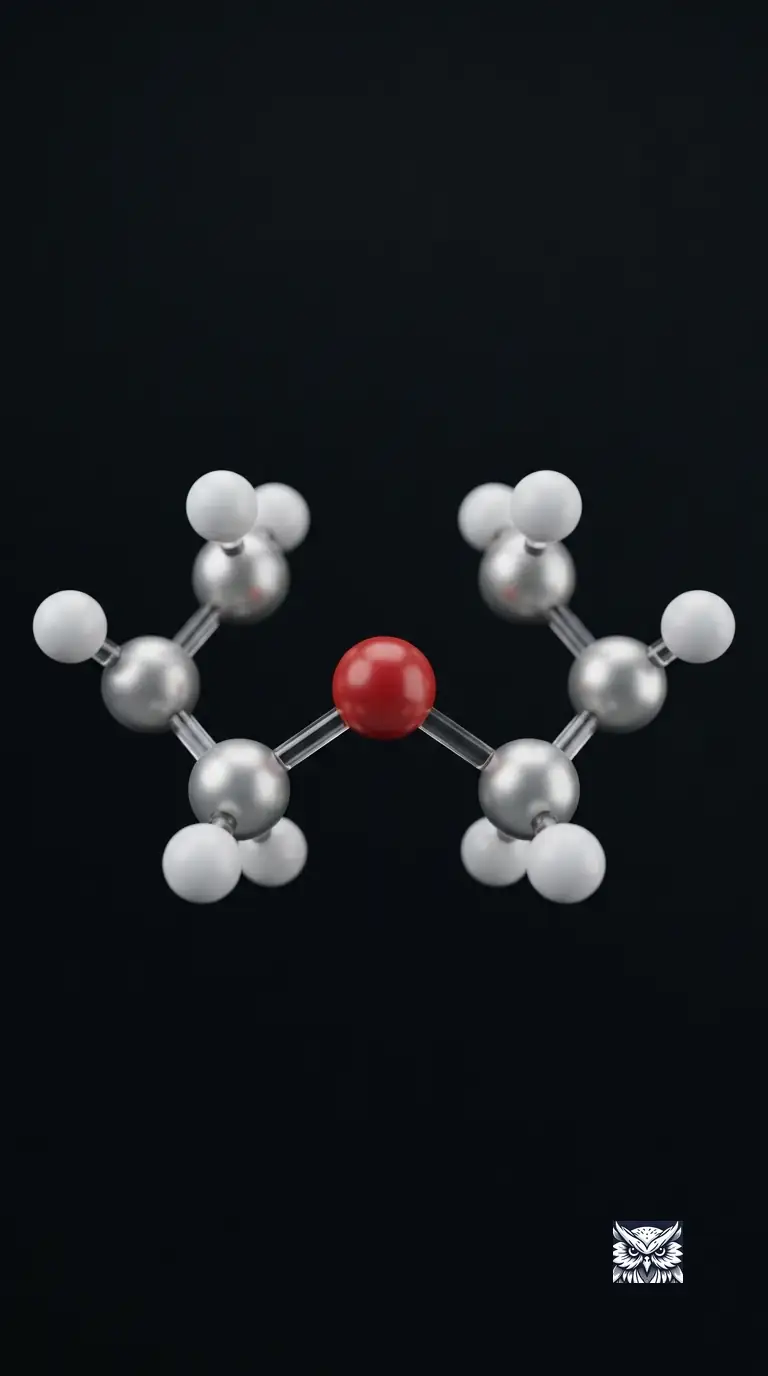
Ethers are molecules where a single oxygen atom acts as a bridge connecting two carbon chains.
Look at this molecule. Two carbon chains meeting quietly at a single oxygen bridge — no dramatic glow, no obvious reactive spot. Ethers are some of the calmest, least reactive molecules in organic chemistry.
That very calmness is exactly why diethyl ether, one of the simplest ethers there is, became one of the most important molecules in the history of medicine. It's stable enough to store and handle safely, yet it dissolves easily into fatty tissue — including your brain.
On October 16, 1846, a dentist used it to put a patient to sleep during surgery, publicly, for the first time in medical history — a date now remembered simply as "Ether Day." Patients who once had to be held down screaming through operations could finally just fall asleep instead.
One boring, introverted, quiet molecule ended centuries of surgery performed on fully conscious, screaming patients. Need I tell you the life-lesson here?
2-Day Crash Course.Master this Chapter.
Click here.
Aldehydes & Ketones
Aldehydes & Ketones can help you freeze your body in time forever.
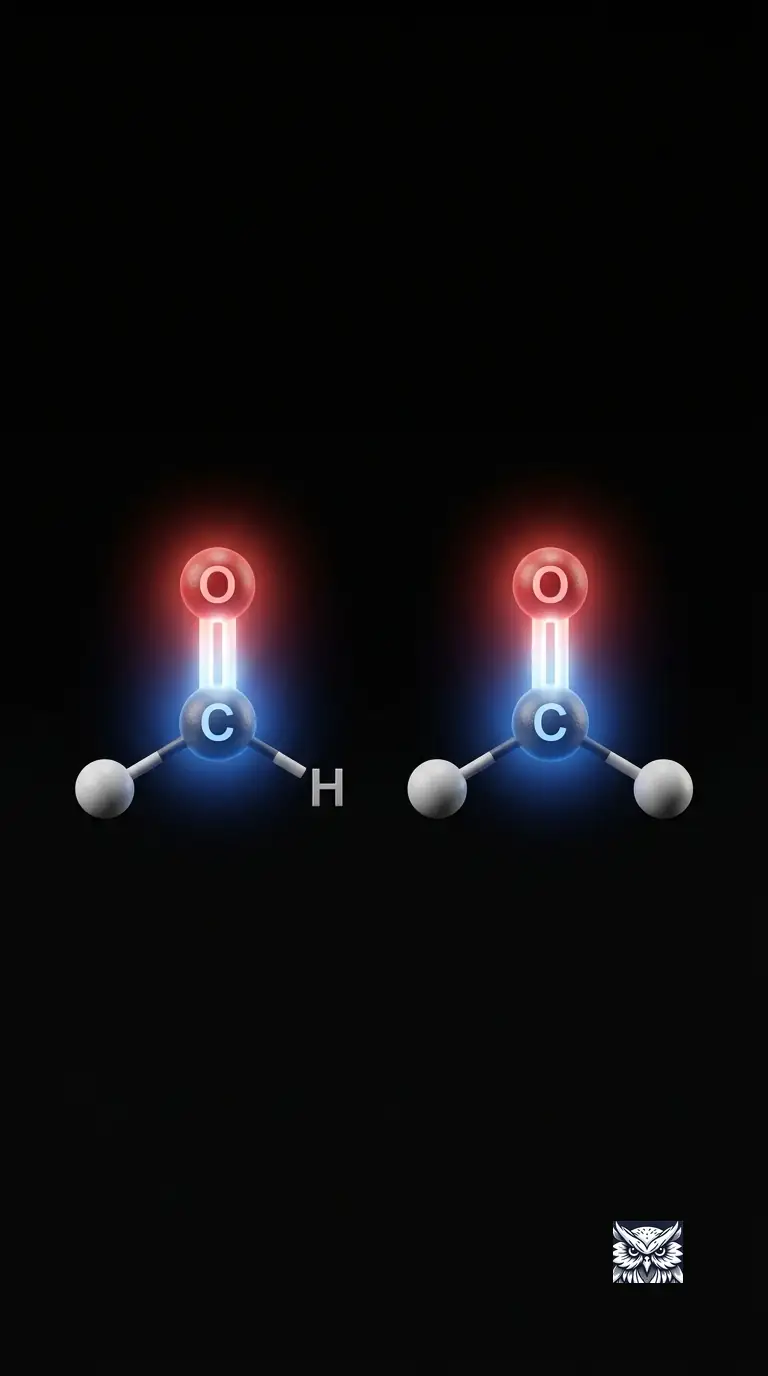
Aldehydes & Ketones both are defined by a carbonyl group (C=O). So what's the difference? In aldehydes, the carbonyl group sits at the end of the chain. In ketones, the carbonyl group is trapped between two carbons.
Oxygen exerts a relentless, greedy pull on shared electrons in a double bond. When oxygen bonds to carbon, it drags that electron cloud heavily toward itself.
So, what happens to the carbon atom left behind in this tug-of-war? It is stripped of negative charge, becoming an exposed positive target for electron-rich attackers.
In ketones, bulky carbon chains on both sides shield this target.
But aldehydes leave it totally unshielded at the end of the chain. This unshielded position allows the aldehyde's carbon to react effortlessly with surrounding proteins. When formaldehyde enters a cell, its exposed carbon instantly anchors onto two separate protein chains at once. This reaction welds adjacent proteins together into a rigid, locked matrix. Because decay enzymes cannot break apart these welded proteins, biological tissue becomes frozen in time.
The way to molecular permanence seems to be exposing the most vulnerable spot to the environment. Life-lesson? Expose your vulnerability to get rid of it and become free.
2-Day Crash Course.Master this Chapter.
Click here.
Carboxylic Acids & Derivatives
Vinegar, the scent of sweet banana, and aspirin are all children of Carboxylic Acids.
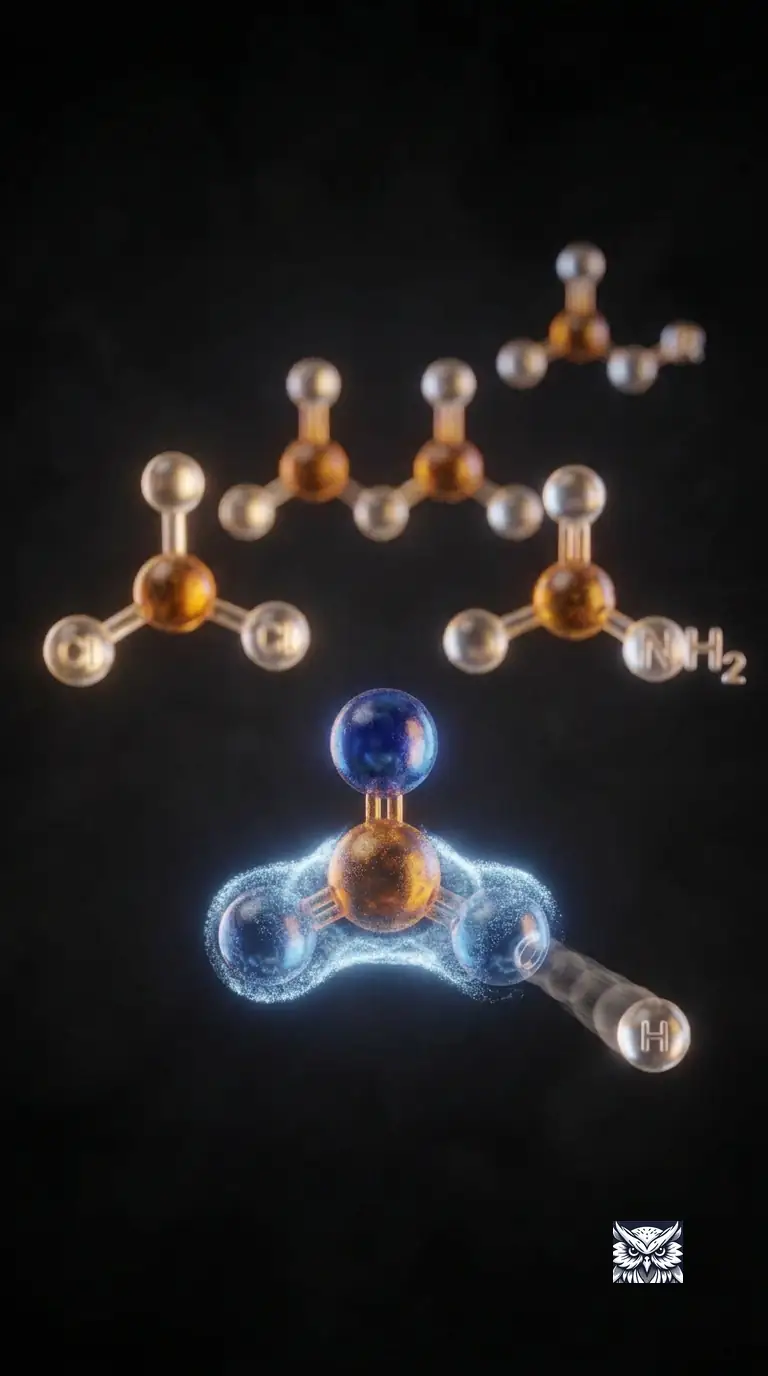
Carboxylic acids are a family of acids in which a carbon is double-bonded to an oxygen and single-bonded to an -OH (hydroxyl) group.
Look at a carboxylic acid molecule. A carbon binds to both a double-bonded oxygen and an -OH group.
When this group releases its positive hydrogen proton, a raw negative charge remains behind. The two oxygen atoms instantly share that negative charge, spreading it evenly across both sites. Spreading out this electric charge stabilizes the resulting ion, making proton release effortless. That is why this specific structure is acidic — it surrenders its proton so easily compared to standard alcohols.
Now, what happens if you keep this stable core but replace that -OH group with a new partner? Swapping that single group creates an entire family of closely related chemical derivatives. If you attach a carbon-oxygen chain in place of -OH, you get an ester (with a sweet banana scent). If you attach a modified ring structure instead, you get aspirin (a pain killer). And so on and so forth.
Sweet fragrance, burning acid, and pain relief — all just surface variations of one molecular core. Love, pain, and peace are no different. Why let simple chemical shifts overpower you? Master the blueprint of life to become unbeatable.
2-Day Crash Course.Master this Chapter.
Click here.
Amines
A single pair of unbonded electrons on a tiny nitrogen atom dictates whether you feel euphoric, focused, or deeply anxious.
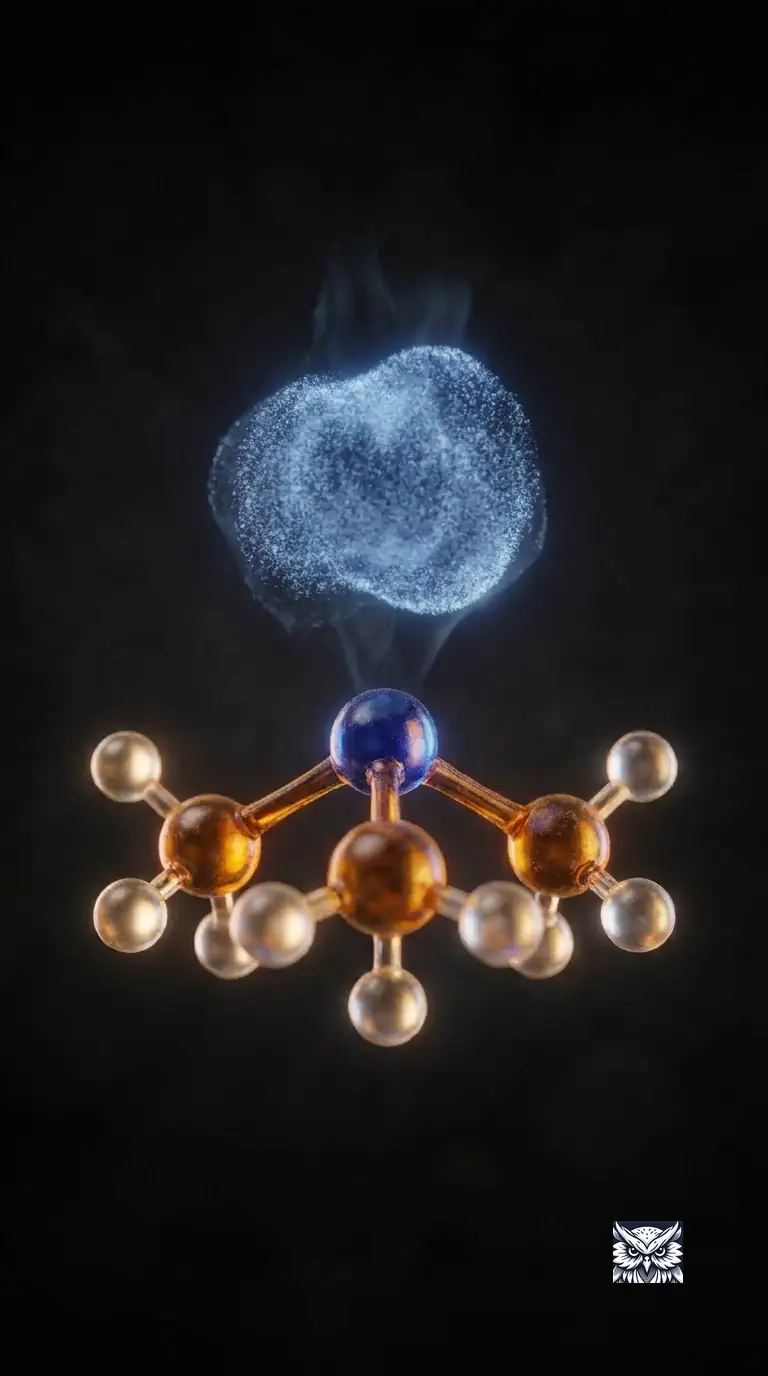
The word amine derives from ammonia. Amines are organic molecules defined by a nitrogen atom bearing a lone, unbonded pair of electrons.
Look closely at a nitrogen atom inside an amine molecule. Nitrogen uses three of its valence electrons for bonds, leaving two unused electrons paired together.
So, what happens when this concentrated cloud of negative charge encounters its environment? It acts like a chemical magnet, reaching out to grab protons.
Key brain chemicals like dopamine and serotonin are built around this exact amine setup. As these molecules float through your synapses, that exposed electron pair locks onto specific brain receptors. Docking into those receptors instantly fires off electrical impulses along your nerves. These rapid impulses dictate whether you feel overwhelming focus, joy, or sudden anxiety.
How crazy is it that every raw human emotion boils down to a single electron pair pulling a switch?
Do you feel stupid being unhappy now that you know that your deepest feelings of motivation, affection, and fear are just an unbonded pair of electrons clicking into a protein switch? Why let some dumb amines rule you?
2-Day Crash Course.Master this Chapter.
Click here.
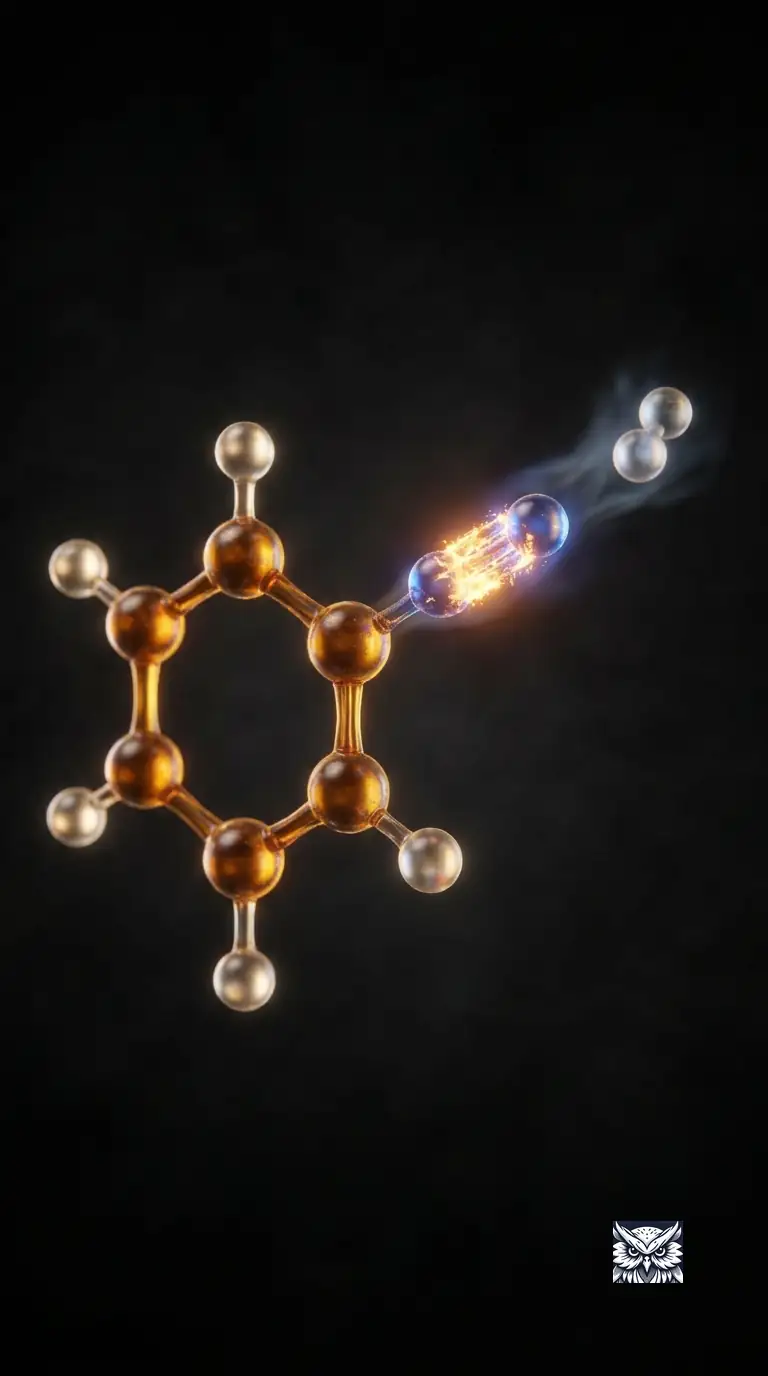
Diazonium Salts
Diazonium was engineered to explode within hours. Ironically they are the reason your latest fashionable clothing is available in bright colors.
The term "di"-"azo"nium comes from "di" meaning two and "azo" which means nitrogen in French. Diazonium salts feature two linked nitrogen atoms that are tied to a carbon ring.
Look at a diazonium molecule. Two nitrogen atoms lock onto a carbon ring. The two nitrogen atoms have a triple bond between them.
To form a triple bond with its partner, the "inner" nitrogen "donates" its electron pair, gaining a "positive" formal charge. This positive charge creates an exceptionally fragile structural trap. The two nitrogens "desperately" want to strip electrons from the ring and snap off as hyper-stable N2 gas. Because snapping that carbon-nitrogen bond takes almost no energy, the molecule decomposes if warmed even slightly.
So, what happens if chemists keep it ice-cold and introduce a second electron-rich carbon ring? That positive nitrogen group attacks the new ring before it has the energy to snap off as gas. The two rings lock permanently together through a stable nitrogen bridge (-N=N-). This linked molecular structure absorbs specific light, creating an intensely vivid color. That molecule creates the vivid shades in the latest fashion from Milan.
The most vibrant, enduring colors in existence can only be created by harnessing something dangerously unstable. Life lesson? "Stability" as society defines it, can kill "creativity". I would rather you go explode into creativity.
2-Day Crash Course.Master this Chapter.
Click here.
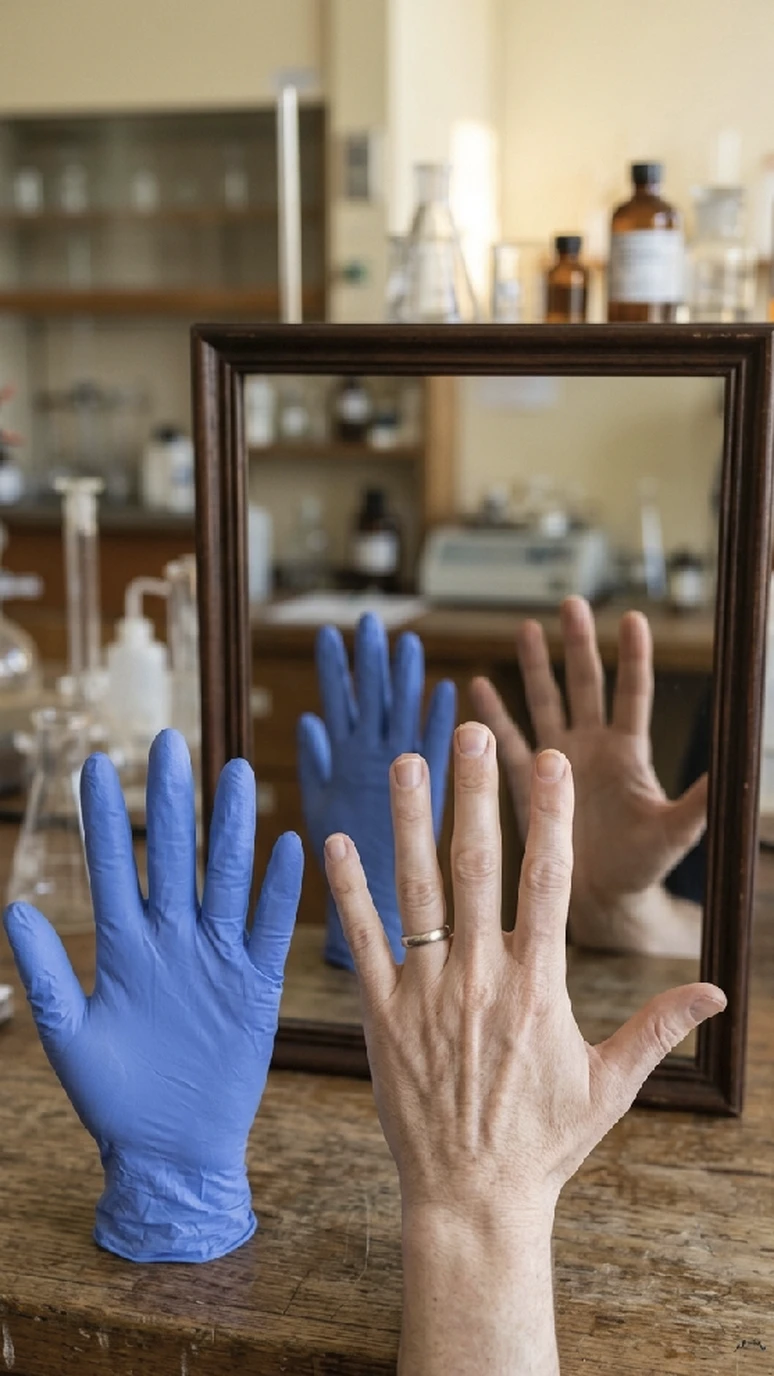
Isomerism
How can two molecules with the same chemical composition act like total opposites? One cures morning sickness while its mirror twin causes birth defects? Same atoms, same formula, same bonds — yet totally different?
The word "iso" in isomer means equal. Isomers are molecules with the exact same chemical formula but different geometrical structure.
Look at two molecules built from the exact same number and type of atoms. Even when their atomic bonds are identical, their 3D shapes can form non-overlapping mirror images.
Think of your left and right hands; they look identical, but a right hand will never fit into a left-hand glove.
So, what happens when these mirror-twins enter your body? Your receptors are 3D pockets designed to fit very specific shapes. One molecule fits cleanly, triggering a precise biological effect. The opposite mirror molecule fails to fit that receptor and docks into a completely different one instead.
For instance, one 3D shape of "thalidomide" eases morning sickness, while its mirror twin causes birth defects.
Isn't it strange that a simple flip in geometry can turn a medicine into a poison?
A real-life analogy to the discussion above: We express surprise when two twins — one a mirror image of the other — behave differently (one is energetic, the other is calm). Maybe we should not be that surprised given what we know at the molecular level?
2-Day Crash Course.Master this Chapter.
Click here.

Carbohydrates
The french fries you eat and the table you eat it on are both made from the same molecule (if you ignore molecular geometry).
The word "carbo"-"hydrate" literally means "watered carbon" — a chemical family built by combining carbon with water.
Welcome to the transition to biology by the way. All these boundaries of "Math, Physics, Chemistry, Biology" are totally made-up/artificial to begin with and there is no truth in these classifications.
Glucose is the most fundamental sugar in biology.
Around the edges of the glucose ring, oxygen and hydrogen groups point outward in very specific directions.
So, what happens when nature starts linking millions of these rings?
If the connecting bonds all point in the exact same direction, the chain curls up into a loose, open spiral (aka bread and rice).
Your stomach enzymes easily fit inside this spiral to break it apart, allowing you to digest these starchy foods like bread and rice.
But what if nature links those exact same glucose rings using alternating up-and-down bonds instead?
This tiny shift in bonding geometry forces the chains to lock perfectly together into tightly packed, rigid sheets.
Because our digestive enzymes cannot grip this flat geometry, it passes right through you.
Instead of digestible food, this unbreakable structure becomes cellulose, forming the tough, solid wood of a tree.
Isn't it crazy that the only difference between a nourishing meal and a rigid piece of furniture is the microscopic angle of a single bond?
Life is entirely a game of geometry. Just as a molecule's posture dictates its chemical power, your posture dictates your energy. Correcting your alignment through exercises (Yoga) isn't just stretching — it is the structural requirement for letting your life force freely flow.
2-Day Crash Course.Master this Chapter.
Click here.
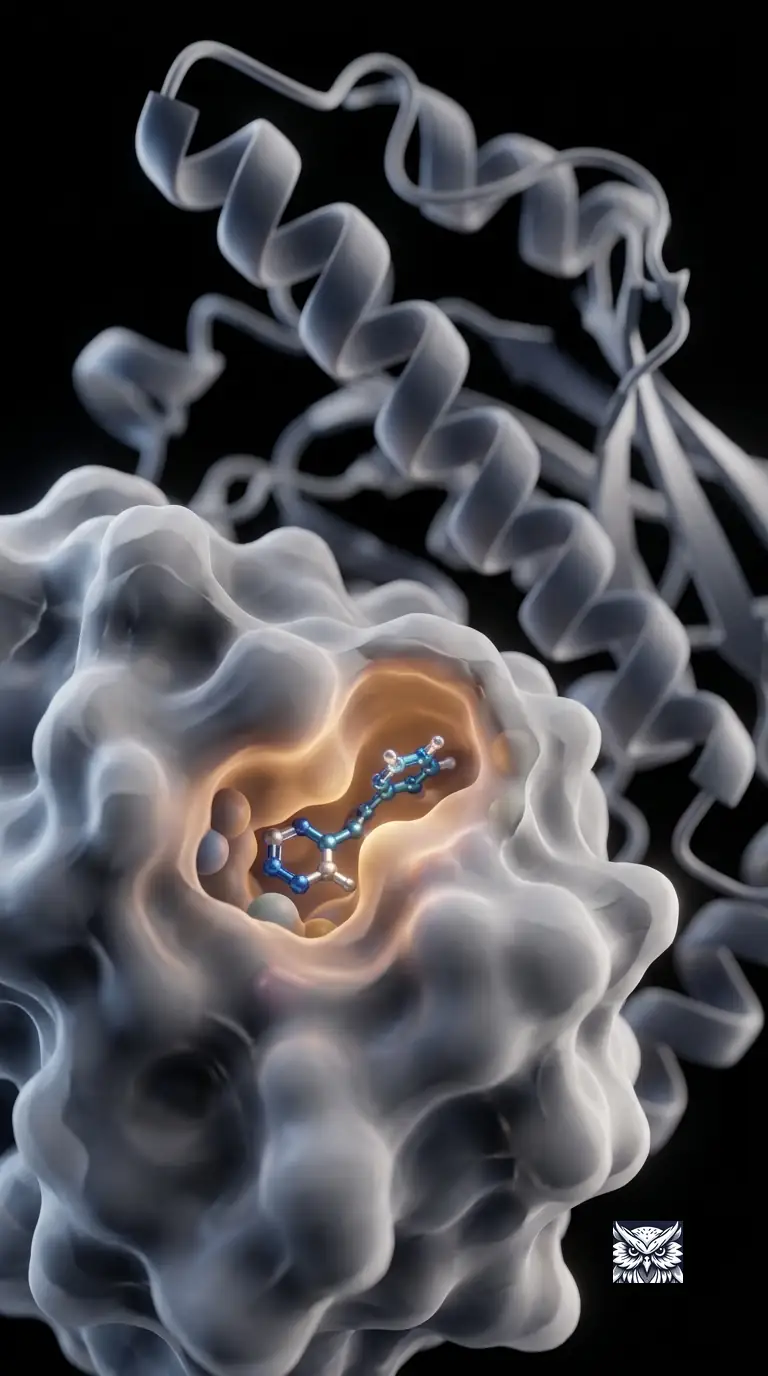
Proteins and Enzymes
A chemical process that "normally" takes a million years to finish, happens inside your brain in a thousandth of a second.
The word protein comes from the Greek "proteios" meaning "primary". Enzyme comes from "enzymos" meaning "to speed up".
Look at an enzyme, which is basically a giant biological machine folded into a specific 3D shape. Somewhere on its surface, there is a tiny "pocket" called an active site.
Now, imagine a small molecule floating around in your body until it randomly collides with this pocket. So, what happens when this wandering molecule perfectly matches the exact shape of that pocket? It slides cleanly inside, locking seamlessly into place like a key sliding into a lock.
But why does this perfect fit actually matter? Once the molecule clicks in, the enzyme grips it tightly and "bends" its chemical bonds right to their breaking point. By physically stretching the molecule like this, the enzyme entirely removes the need to wait for energy to force a reaction.
A chemical reaction that would normally take millions of years, finishes in a thousandth of a second!
Almost everything needed to keep you alive is happening on auto mode. You can't intervene even if you wanted to (breathing being one exception). Nothing is in your control and everything is taken care of. So what are you so worried about?
2-Day Crash Course.Master this Chapter.
Click here.
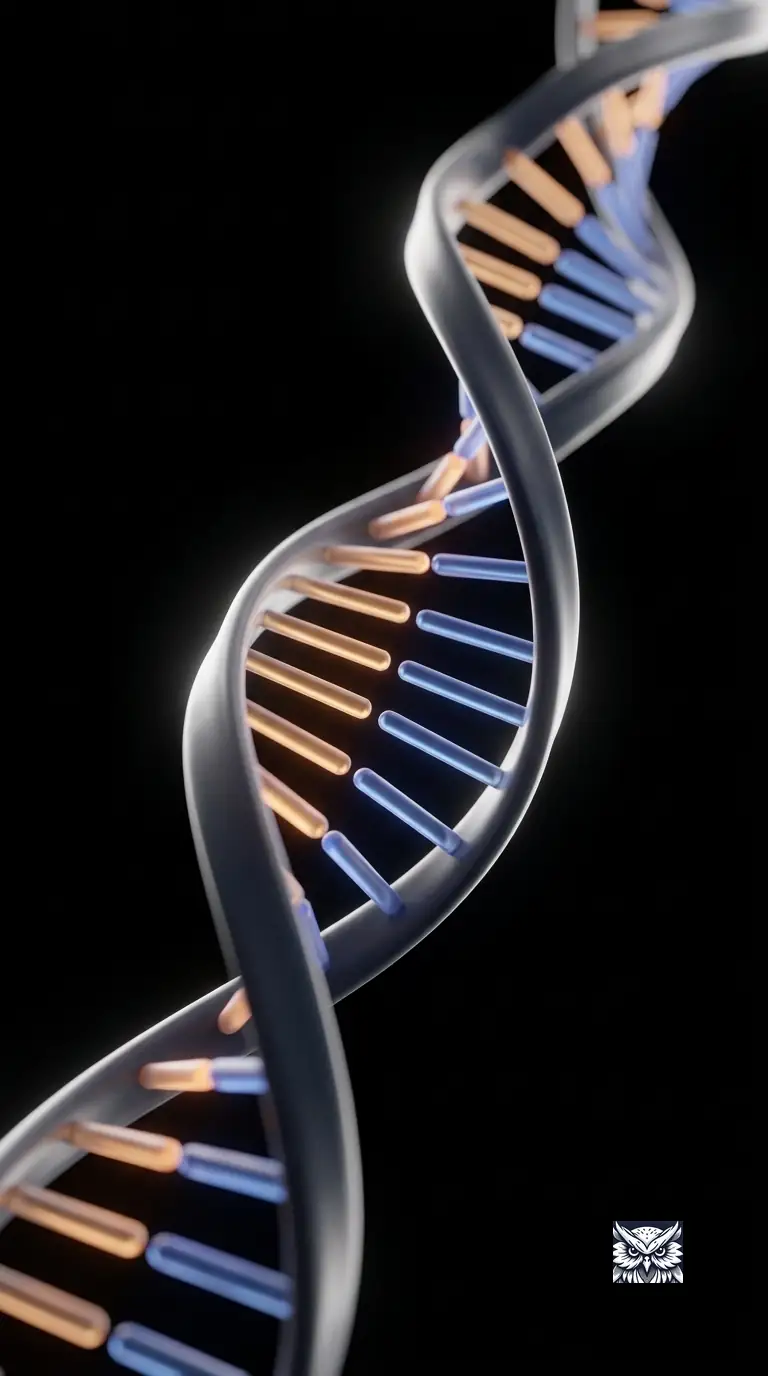
Nucleic Acids, Vitamins & Hormones
A microscopic speck of DNA can store more information than every data center on Earth combined. You are a mobile hard-drive.
The terms nucleic acid, vitamins, and hormones refer to the body's software and data. A single gram could replace millions of modern hard-drives.
Look at a DNA double helix. It is a twisting ladder built entirely out of chemical bases.
The exact "order of the rungs" on this ladder isn't random; it functions exactly like the 1s and 0s in computer code.
Because these bases physically lock together in a highly specific sequence, they create an incredibly dense instruction manual.
So, what exactly happens when your cells actually need to build something?
Tiny molecular machines read this sequence, translating the chemical code into physical proteins that build and run your body.
Because this information is stored at the atomic level, it takes up almost zero physical space.
This means all the complex instructions required to build a human being easily fit inside a nucleus you cannot even see.
We still don't understand our own instruction manual.
2-Day Crash Course.Master this Chapter.
Click here.
Accelerate your career. Get the world-class guidance you deserve. Start today.
Contact directly
support@4sh.education
State Boards · CBSE · ICSE · Engineering · Medical · STEM PhD · MBA · CFA · SAT